Blog
Choosing the best blood pressure monitor for home use is not a casual decision, especially if you regularly monitor your blood pressure for yourself or a family member. The right home blood pressure monitor gives you clearer readings and helps you record and review results calmly, instead of relying on a single measurement at the pharmacy or clinic.
However, accuracy does not depend on the device alone. The type of blood pressure monitor, cuff size, sitting position, measurement timing, and how readings are recorded all make a real difference in home monitoring.
سنتحدث فى هذا المقال عن!
ToggleIf you want to compare available options directly, you can browse the Blood Pressure Monitors section on WeCare Egypt, or read the guide to the best blood pressure monitor in Egypt to compare devices before buying.
Important notice: A home blood pressure monitor helps with tracking and recording readings, but it does not replace a doctor’s visit. You should not change or stop medication based on a home reading without medical consultation.
What is the best blood pressure monitor for home use?
The best blood pressure monitor for home use is an automatic digital upper-arm blood pressure monitor with a cuff that fits the arm circumference, a clear display, simple operation, and memory for storing readings. This type suits most users because it is easier to use and better suited for regular home blood pressure monitoring.
For home use, it is preferable to choose an automatic blood pressure monitor with an upper-arm cuff, while making sure the cuff fits the arm circumference and that the measurement method is correct. A digital blood pressure monitor for the upper arm is usually more practical than wrist and finger devices, which may be less reliable in many cases if they are not used accurately.
When buying the best home blood pressure monitor, focus on these points:
- Upper arm blood pressure monitor.
- Suitable cuff for arm size.
- Large, clear display.
- Simple one-touch operation.
- Memory for storing readings.
- Support for more than one user if the device is for family use.
- A trusted source to buy a blood pressure monitor in Egypt.
- Clear warranty and after-sales service.
Why do you need a blood pressure monitor at home?
Having a blood pressure monitor at home helps you track readings in an organized way, especially if you measure your blood pressure regularly or need to share the results with your doctor. Home monitoring gives a better picture than relying on a single reading taken at a random time.
Owning a home blood pressure monitor helps you:
- Monitor blood pressure at different times.
- Record readings instead of relying on memory.
- Notice changes over time.
- Monitor elderly family members at home.
- Compare readings under similar conditions.
- Share a clear record with the doctor when needed.
- Reduce anxiety caused by one unusual reading.
For monitoring to be useful, however, you should learn how to measure blood pressure at home correctly, because sitting position, cuff placement, and arm level can affect the result.
What is a blood pressure monitor?
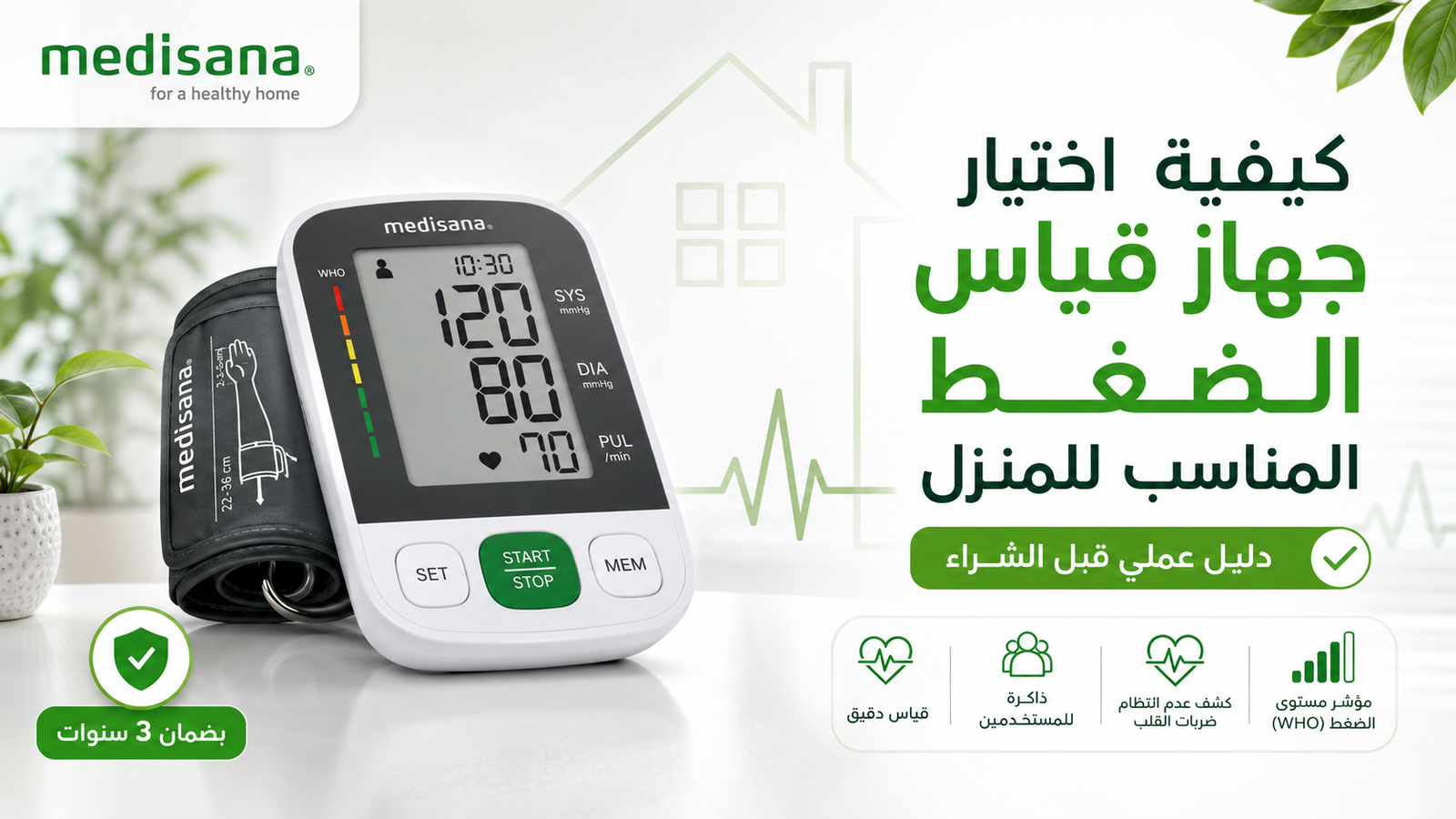
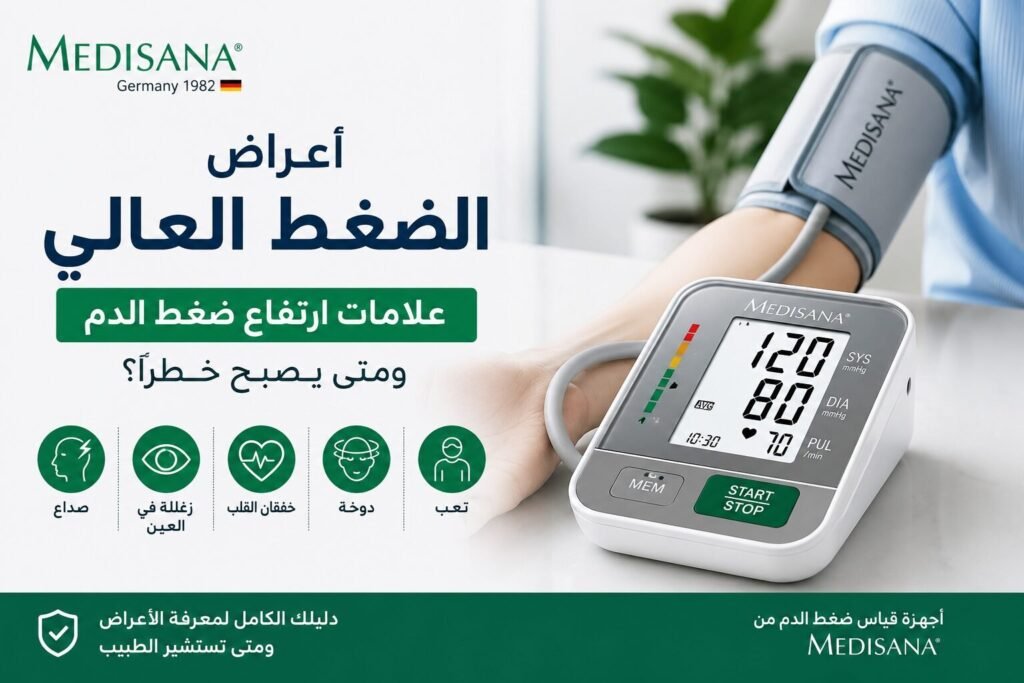
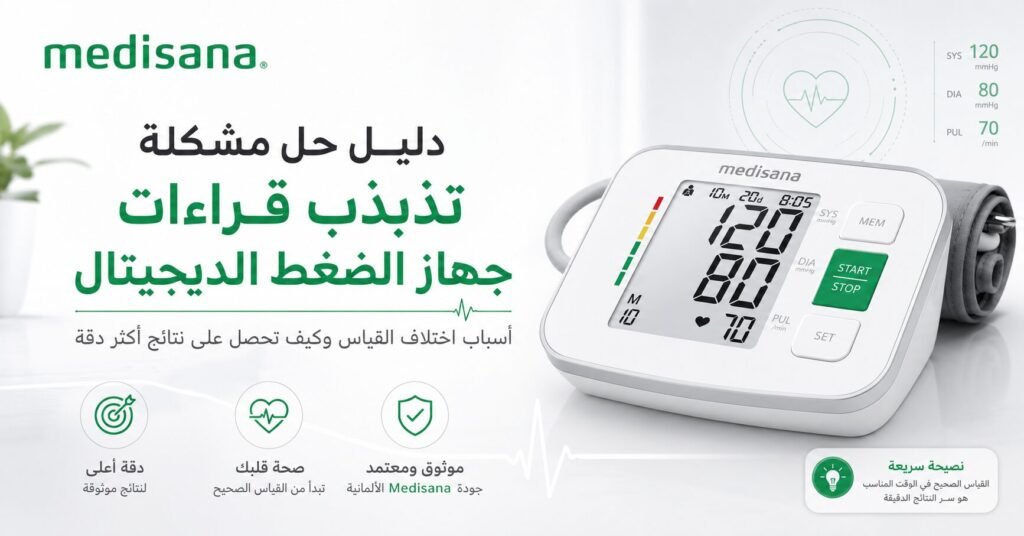
A blood pressure monitor is a device used to measure blood pressure inside the arteries. It usually displays the result in two main numbers: systolic pressure SYS and diastolic pressure DIA. Some digital blood pressure monitors also show pulse rate and previous reading memory.
A blood pressure reading usually appears in this format: 120/80 mmHg.
| Symbol | Meaning | Explanation |
|---|---|---|
| SYS | Systolic pressure | The upper number, which measures blood pressure when the heart contracts |
| DIA | Diastolic pressure | The lower number, which measures blood pressure when the heart relaxes |
| PUL / Pulse | Pulse rate | The number of heartbeats per minute |
| MEM | Memory | Previous readings stored in the device |
| USER 1 / USER 2 | User 1 / User 2 | Appears in devices that support more than one user |
To better understand readings, you can read the guide to normal blood pressure and correct measurement.
Types of blood pressure monitors: which type suits you?
There are several types of blood pressure monitors, but regular home use is usually best suited to a digital upper-arm blood pressure monitor. A wrist blood pressure monitor requires more accurate positioning, while a manual device requires experience in measuring and reading results.
| Type | Suitable for whom? | Advantages | Notes |
|---|---|---|---|
| Upper arm blood pressure monitor | Most home users | Clearer reading, stable cuff, suitable for monitoring | Requires choosing the right cuff size |
| Wrist blood pressure monitor | Those who struggle with an arm cuff | Small and easy to carry | More affected by wrist position |
| Manual/mercury blood pressure monitor | Doctors and specialists | Accurate when used by an experienced person | Not suitable for most home uses |
Upper arm blood pressure monitor
An upper arm blood pressure monitor is the best choice for most home users because it is easier to position the cuff correctly and is better suited for regular monitoring. If you are looking for the best blood pressure monitor for home use, the upper-arm type should usually be your first option.
It suits you if you want:
- A home blood pressure monitor for daily use.
- A clear and fast reading.
- A blood pressure monitor for elderly users.
- A cuff that stays stable on the arm.
- Organized tracking of more than one reading.
You can compare the available options through the home blood pressure monitors section on WeCare Egypt.
Wrist blood pressure monitor
A wrist blood pressure monitor is small and easy to carry, but it requires more care during measurement because the reading may be affected if the wrist is not at heart level.
It may suit some people who find it difficult to use an arm cuff, but it is not the first choice for regular home monitoring when compared with an upper arm blood pressure monitor.
Manual blood pressure monitor
A manual or mercury blood pressure monitor is usually used in clinics and medical centers because it requires experience in using a stethoscope and reading the gauge.
Therefore, if the goal is quick and easy measurement at home, a digital blood pressure monitor for the upper arm is more practical.
Digital blood pressure monitor or manual device?
For home use, a digital blood pressure monitor is the easiest choice for most people because it works automatically and displays the result on a clear screen. A manual device requires skill and experience, so it is more suitable for professionals than the average user.
| Comparison | Digital blood pressure monitor | Manual blood pressure monitor |
|---|---|---|
| Ease of use | Very easy | Requires experience |
| Reading method | Appears on the screen | Requires a stethoscope and skill |
| Suitable for elderly users | Usually yes | Not the best option |
| Home use | Excellent | Less practical |
| Reading memory | Available in many models | Not available |
| Suitable for doctors | Possible | Yes |
Choose a digital blood pressure monitor if you want:
- Quick and easy measurement.
- A clear display.
- One-touch operation.
- A device suitable for elderly users.
- Memory for storing results.
- Regular use at home.
- A device that does not require prior experience.
The most important features of the best blood pressure monitor for home use
The best blood pressure monitor for home use should not be chosen by price alone, but by a set of practical features: a suitable cuff, clear display, simple operation, reading memory, multi-user support, and a trusted purchase source that provides clear information and a suitable warranty.
| Feature | Why does it matter? | Who needs it most? |
|---|---|---|
| Suitable cuff | Directly affects reading accuracy | All users |
| Large display | Makes numbers easier to read | Elderly users |
| One-touch operation | Reduces usage errors | Home use |
| Reading memory | Helps track changes | Those who measure regularly |
| Multi-user support | Prevents readings from getting mixed | Families |
| Average readings | Gives a clearer picture than one reading | Daily monitoring |
| Warranty and trusted source | Protects the buying experience | The Egyptian market |
1. A cuff suitable for arm circumference
The cuff is one of the most important factors in measurement accuracy. If it is too small or too large, the reading may be inaccurate.
Before buying a home blood pressure monitor, make sure the cuff fits the arm circumference, especially if the device will be used by more than one person at home.
2. Large and clear display
A clear display is very important, especially for elderly users or anyone using the device without assistance. The larger the numbers are, the easier it becomes to record the reading with fewer errors.
3. Ease of operation
A complicated device may make the user avoid measuring or use it incorrectly. A reliable automatic blood pressure monitor should work with simple steps and display the result clearly.
4. Memory for storing readings
Memory in a digital blood pressure monitor is useful for anyone who measures blood pressure regularly, as it helps compare previous results and share the record with the doctor when needed.
5. Multi-user support
If the device is for family use, choosing a model that supports more than one user helps separate readings and prevent results from getting mixed.
6. Trusted purchase source
Buying a blood pressure monitor in Egypt from a clear source helps you understand the specifications, warranty, and usage method. You can start from the WeCare Egypt store or directly from the Blood Pressure Monitors section.
Best blood pressure monitor by use case
There is no single device that suits everyone. The best blood pressure monitor for home use depends on how it will be used: daily monitoring, family use, elderly care, or simple reassurance. Each case requires different features to varying degrees.
| Use case | Most suitable device | Key features |
|---|---|---|
| General reassurance | Simple digital upper-arm device | Clear display, suitable cuff, easy operation |
| Daily monitoring | Device with memory and average readings | Memory, accuracy, easy recording |
| Elderly users | Blood pressure monitor for elderly users with large display | Clear numbers, simple steps |
| Family use | Device that supports more than one user | User profiles, good memory |
| Travel or mobility | Compact device | Easy to carry, with attention to accuracy |
If you want a simple device for reassurance
Choose a device that is:
- An upper arm blood pressure monitor.
- Easy to operate.
- Clear on screen.
- Equipped with a suitable cuff.
- Suitable for home use.
If you monitor blood pressure daily
Look for a digital blood pressure monitor that includes:
- Reading memory.
- A large display.
- A comfortable cuff.
- The ability to save more than one result.
- Fast operation.
- Average readings if available.
If the device is for elderly users
If you need a blood pressure monitor for elderly users, focus on:
- A very large display.
- Few and clear buttons.
- An easy-to-fit cuff.
- An easy-to-understand reading.
- Few operating steps.
If the device is for the family
It is better to choose a home blood pressure monitor that provides:
- More than one user profile if available.
- Good memory capacity.
- A cuff suitable for more than one person.
- A practical design for repeated use.
Best blood pressure monitors from WeCare Egypt
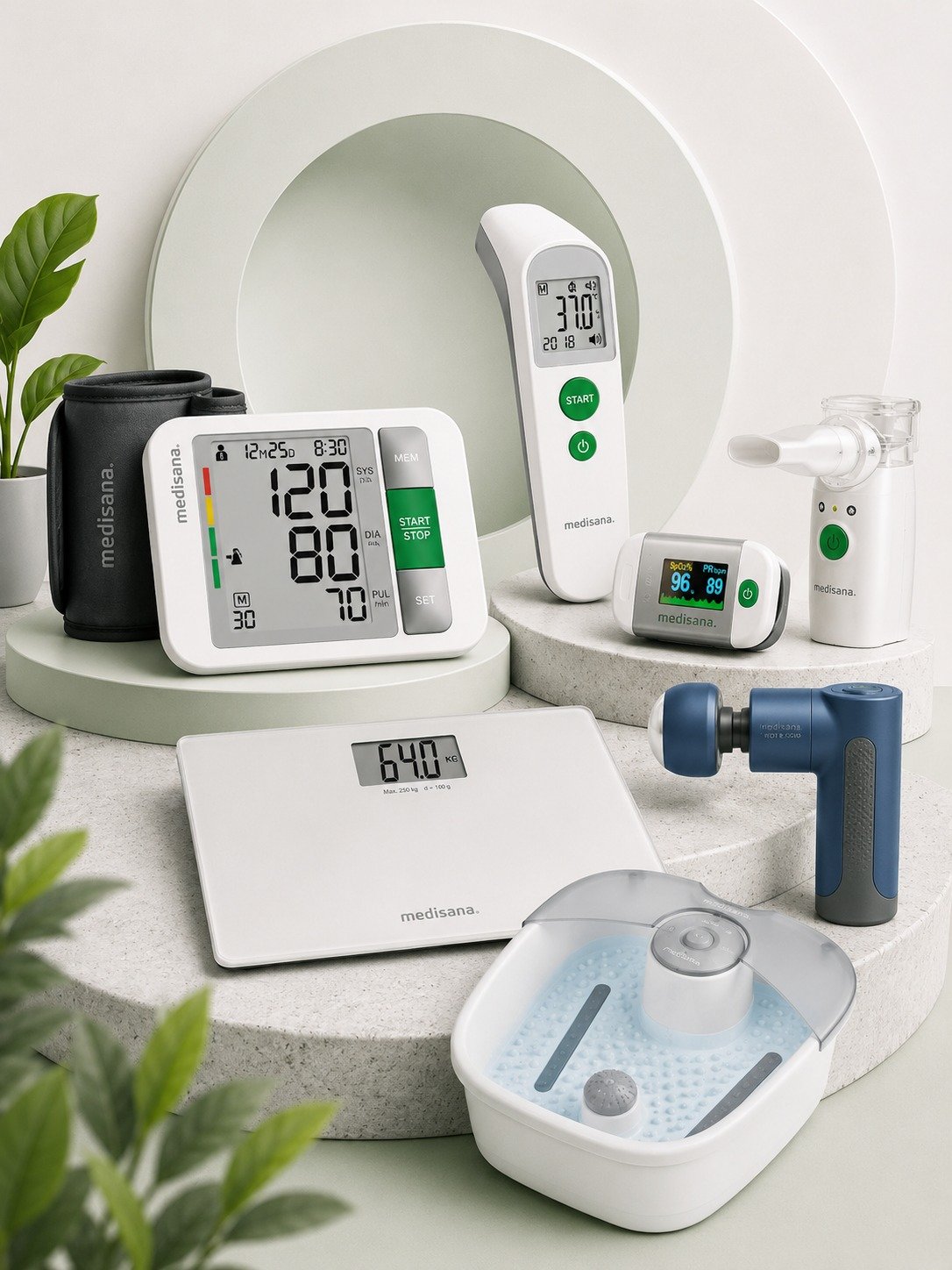
WeCare Egypt offers a range of blood pressure monitors suitable for home use, especially from Medisana. These are practical options for anyone looking for a Medisana blood pressure monitor in Egypt that is clear, easy to use, and suitable for comparing more than one model before buying.
Medisana BU 565 blood pressure monitor
The Medisana BU 565 blood pressure monitor is suitable for anyone looking for a practical digital blood pressure monitor for home monitoring, with a clear display and a home-friendly user experience.
You can review the product here: Medisana BU 565 blood pressure monitor
Medisana BU 510 blood pressure monitor
The Medisana BU 510 blood pressure monitor is a suitable choice for anyone who wants a clear and easy-to-use home blood pressure monitor that can be compared with other devices in the store.
You can review the product here: Medisana BU 510 home blood pressure monitor
Medisana BU516 blood pressure monitor
The Medisana BU516 blood pressure monitor is suitable for anyone who wants an upper arm blood pressure monitor for home use and regular reading tracking.
You can review the product here: Medisana BU516 upper-arm blood pressure monitor
To compare all options, visit the Blood Pressure Monitors section on WeCare Egypt.
Comparison of the best Medisana blood pressure monitors on WeCare Egypt
If you want to choose a suitable Medisana blood pressure monitor quickly, start by comparing usage type, ease of reading, memory availability, and how suitable the device is for elderly users or family use. Comparison helps you buy with confidence instead of relying on price alone.
| Device | Best for whom? | Key features | Product link |
|---|---|---|---|
| Medisana BU 565 | Regular home monitoring | Practical digital blood pressure monitor, clear display, suitable for daily use | Review Medisana BU 565 |
| Medisana BU 510 | Simple home and family use | Easy to use, suitable for anyone who wants a clear and practical home blood pressure monitor | Review Medisana BU 510 |
| Medisana BU516 | Those who prefer upper-arm blood pressure measurement | Suitable for home monitoring, practical for regular use, clear reading | Review Medisana BU516 |
Quick selection tip: If the device is for daily use or elderly users, prioritize a clear display, easy operation, and a suitable cuff size. If the device is for more than one family member, memory or multi-user support becomes an important feature.
To compare all available models, you can browse the Blood Pressure Monitors section on WeCare Egypt.
How to measure blood pressure at home correctly
Even the best blood pressure monitor for home use may give an inaccurate reading if the measurement method is wrong. To measure blood pressure at home correctly, sit calmly, use a suitable cuff, keep your arm at heart level, and do not talk or move during measurement.
Before measuring:
- Avoid coffee, smoking, and physical effort for a suitable period before measurement.
- Empty your bladder.
- Sit calmly for a few minutes.
- Do not measure blood pressure over clothing.
- Use a suitable cuff.
- Place your arm on a stable surface at heart level.
- Do not talk during measurement.
- Record the reading with the time and date.
For a full explanation of the steps, read the article How to measure blood pressure at home.
How to measure blood pressure with a digital device step by step
To measure blood pressure with a digital blood pressure monitor, sit in a comfortable position, attach the cuff directly to your arm, keep your arm at heart level, then press the start button and wait for the reading to appear. Record the result and do not rely on one reading only when there is a clear difference.
Follow these steps:
- Sit in a quiet place.
- Rest for a few minutes before measuring.
- Place your feet on the floor without crossing them.
- Support your back properly.
- Place your arm on a stable surface at heart level.
- Attach the cuff directly to the arm over bare skin.
- Make sure the cuff is not too tight or too loose.
- Press the start button.
- Do not speak or move during measurement.
- Wait until the full reading appears.
- Record the reading, time, and date.
- Repeat the measurement after one minute if the reading is unusual or according to your doctor’s guidance.
How to read an electronic blood pressure monitor
Reading an electronic blood pressure monitor depends on understanding the basic symbols: SYS for systolic pressure, DIA for diastolic pressure, and PUL for pulse rate. The higher number is written first, the lower number second, and the pulse often appears separately.
Practical example:
If the reading appears as 120/80 and the pulse is 72, this means:
- SYS = 120: systolic pressure.
- DIA = 80: diastolic pressure.
- PUL = 72: heartbeats per minute.
To better understand readings, see the article Normal blood pressure and correct measurement.
Important medical note: Measuring blood pressure is the main way to know whether a reading is within a healthy range, because high blood pressure often causes no obvious symptoms.
Which arm should blood pressure be measured in?
Blood pressure can be measured in either arm in many cases, but for home monitoring it is better to use the same arm every time so comparisons are more accurate. If your doctor recommends a specific arm, follow their guidance.
If you notice a clear and repeated difference between the two arms, do not ignore it. Record the readings and discuss them with your doctor, especially if the difference is large or accompanied by unusual symptoms.
How often should blood pressure be measured at home?
The number of times blood pressure should be measured at home varies depending on the condition and the doctor’s recommendation. Some people need daily measurement, while others only need periodic measurement. The most important thing is consistency in the measurement method and regular recording of readings.
There is no single rule that suits everyone. It is better to ask your doctor about:
- The appropriate number of measurements for you.
- The best time to measure.
- Whether you need morning and evening measurements.
- When readings should be sent to the doctor.
- When a reading becomes concerning.
Why does blood pressure reading change from time to time?
Blood pressure readings commonly vary from time to time, and this does not always mean there is a problem with the device. Blood pressure naturally changes throughout the day and can be affected by stress, coffee, movement, sleep, sitting position, and cuff size.
The most common causes of reading variation include:
- Stress or anxiety.
- Coffee.
- Smoking.
- Physical activity.
- Lack of sleep.
- A full bladder.
- Sitting position.
- Talking during measurement.
- Not supporting the arm.
- Using an unsuitable cuff.
- Measuring at completely different times.
Therefore, do not rely on one reading only. Record the results and observe the overall trend, especially if you are monitoring blood pressure based on medical advice.
Common mistakes that affect blood pressure monitor accuracy
The most common blood pressure measurement mistakes are measuring over clothing, talking during measurement, moving the arm, not supporting the back, keeping the arm away from heart level, and using an unsuitable cuff. These mistakes can clearly affect the accuracy of a home blood pressure monitor.
Avoid these mistakes:
- Measuring over clothing.
- Talking during measurement.
- Moving the arm.
- Sitting without back support.
- Crossing the legs.
- Not keeping the arm at heart level.
- Using an unsuitable cuff.
- Measuring immediately after coffee or smoking.
- Relying on one reading only.
- Not recording the reading.
Practical tip: If an unusual reading appears, do not panic immediately. Check your sitting position and cuff placement, wait a little, then measure again and record both results.
Why is the blood pressure cuff important?
The blood pressure cuff is an essential factor in reading accuracy. A cuff that is too small may raise the reading above the actual value, while a cuff that is too large may give a lower-than-expected reading. Therefore, you should choose a cuff that fits the arm circumference before buying.
When buying a home blood pressure monitor, review the cuff specifications carefully, especially if the device will be used by more than one family member.
It is better to check:
- The cuff size range.
- Whether it fits the arm circumference.
- Whether it is easy to put on.
- Whether the device is an upper arm blood pressure monitor.
- Whether a replacement cuff can be purchased when needed.
Is a wrist blood pressure monitor suitable for home use?
A wrist blood pressure monitor may be suitable for some people, but it is not the first choice for regular home monitoring. The reason is that wrist readings are easily affected by hand position, especially if the wrist is not at heart level.
If you are looking for the best blood pressure monitor for home use, an upper-arm device is usually the better choice. A wrist monitor may be a supporting option in specific cases, provided that the usage instructions are followed carefully.
Is an electronic blood pressure monitor the same as a digital blood pressure monitor?
Yes. In common usage, people usually mean the same type when they say electronic blood pressure monitor, digital blood pressure monitor, or digital pressure measuring device. All these terms describe a device that works automatically and displays the reading on a digital screen.
Common expressions used in the Egyptian market include:
- Electronic blood pressure monitor.
- Digital blood pressure monitor.
- Digital pressure measuring device.
- Home blood pressure monitor.
- Automatic blood pressure monitor.
Is blood pressure monitor memory important?
Yes, memory is important if you measure blood pressure regularly, because it helps you save previous readings and compare them over time. It is also useful when sharing measurement records with the doctor instead of relying on memory.
Memory in a digital blood pressure monitor helps you:
- Save previous results.
- Review readings easily.
- Track changes over time.
- Show the record to your doctor.
- Reduce forgotten results.
- Separate readings for more than one user if the device supports it.
Does the price of a blood pressure monitor determine quality?
The price of a blood pressure monitor matters, but it is not the only measure of quality. What matters more is the device type, cuff size, display clarity, ease of use, monitoring accuracy, warranty, and how well it suits your real needs at home.
A mid-priced blood pressure monitor in Egypt may be very suitable if it is:
- For the upper arm.
- Equipped with a suitable cuff.
- Clear on screen.
- Easy to use.
- From a trusted brand.
- Suitable for your daily needs.
- Available from a clear purchase source.
A higher-priced device may include additional features such as larger memory, multi-user support, or average readings, but these are not necessary for everyone.
How do you choose the right blood pressure monitor?
To choose the right blood pressure monitor, first define the reason for use: daily monitoring, elderly care, family use, or general reassurance. Then compare device type, cuff size, display clarity, memory, and ease of operation.
Before buying a home blood pressure monitor, ask yourself:
- Do I need the device for daily use?
- Is the device for me alone or for the family?
- Is the display clear?
- Is the cuff suitable?
- Is operation easy?
- Do I need memory?
- Do I need more than one user profile?
- Do I want a simple device or one with additional features?
- Is the device an upper arm blood pressure monitor?
- Is the price suitable for the features?
After answering these questions, your decision will be clearer, and you will choose a device that meets your needs instead of relying only on the name or price.
When is a blood pressure reading concerning?
A blood pressure reading becomes concerning if it is very high or unusually low, especially if it repeats or appears with symptoms such as chest pain, shortness of breath, sudden weakness, severe blurred vision, difficulty speaking, or numbness on one side of the body.
If a very high reading appears, sit calmly and repeat the measurement after one minute. If the reading remains high or concerning symptoms appear, seek medical help immediately.
Medical notice: Do not use a blood pressure monitor to diagnose your condition yourself or adjust treatment. The device helps with monitoring, while the doctor is responsible for interpreting readings and linking them to your health condition.
Content review and trust: This guide was prepared to help users in Egypt choose a suitable home blood pressure monitor based on practical factors such as device type, cuff size, ease of use, display clarity, and correct measurement method.
Medical notice: This content is for education and selection support only, and it is not a substitute for a doctor’s diagnosis or advice. If blood pressure readings are repeatedly high or low, or if they appear with unusual symptoms, you should consult a specialist doctor immediately.
Last updated: July 2026.
Summary: choosing the best blood pressure monitor for home use
Choosing the best blood pressure monitor for home use depends on your real needs and how you use the device, not only on price or brand name.
In most cases, the most suitable choice is a digital upper-arm blood pressure monitor with a suitable cuff, clear display, simple operation, and useful memory if you need regular monitoring.
Remember that reading accuracy does not depend on the device alone, but also on:
- The measurement method.
- Sitting position.
- Cuff size.
- Measurement timing.
- Organized recording of readings.
Start by reviewing the Blood Pressure Monitors section on WeCare Egypt, then read the guide to the best blood pressure monitor in Egypt if you want a broader comparison before buying.
Frequently Asked Questions
What is the best blood pressure monitor for home use?
The best choice in most cases is an automatic digital upper-arm blood pressure monitor with a suitable cuff, clear display, and simple operation. This type is practical for home use and helps track readings regularly.
Is a digital blood pressure monitor accurate?
Yes, a digital blood pressure monitor is suitable for home monitoring when you choose a reliable device and use it correctly with a cuff that fits the arm circumference. However, home readings do not replace medical consultation.
Is a wrist blood pressure monitor good?
A wrist blood pressure monitor may suit some people, but it is not the first choice for general home monitoring because it is more sensitive to hand position during measurement.
What is the best blood pressure monitor for elderly users?
The best blood pressure monitor for elderly users is usually a digital upper-arm device with a large display, clear buttons, a comfortable cuff, and simple operation without many steps.
Is the blood pressure cuff important?
Yes, cuff size is very important for measurement accuracy. An unsuitable cuff may lead to a reading that is higher or lower than the actual value, so cuff size should be checked before buying.
What do SYS and DIA mean on a blood pressure monitor?
SYS means systolic pressure, and DIA means diastolic pressure. The first number is the higher one, and the second is the lower one. Some devices also show pulse rate under PUL or Pulse.
Should you take more than one reading?
More than one reading can be taken when needed, especially if the first reading is unusual. The important thing is to record the results and compare them under similar conditions, or follow the doctor’s guidance.
Can blood pressure be measured over clothing?
No, it is better to place the cuff directly on the skin because measuring over clothing may affect reading accuracy and make the result less reliable.
Which arm should blood pressure be measured in?
Either arm can be used in many cases, but it is better to use the same arm for home monitoring, or follow the doctor’s guidance if they specify a particular arm.
Does the price of a blood pressure monitor determine the best choice?
No. Price is important, but it is not the only selection factor. Device type, cuff size, display clarity, ease of use, and suitability for your needs are more important.
Read also
- How to measure blood pressure at home
- Best blood pressure monitor in Egypt
- Blood Pressure Monitors
- Medisana devices in Egypt
- WeCare Egypt Store
Trusted Medical Sources
Explore Trusted Home Medical Devices and Medical Supplies
Compare blood pressure monitors, inhalation devices, weight scales, massage devices, and home health care products, then choose the most suitable option for your daily needs from WeCare Egypt.
Shop Medical Supplies and Home Medical Devices