How to Measure Temperature Under the Armpit: Do You Add a Degree?
10
Jul
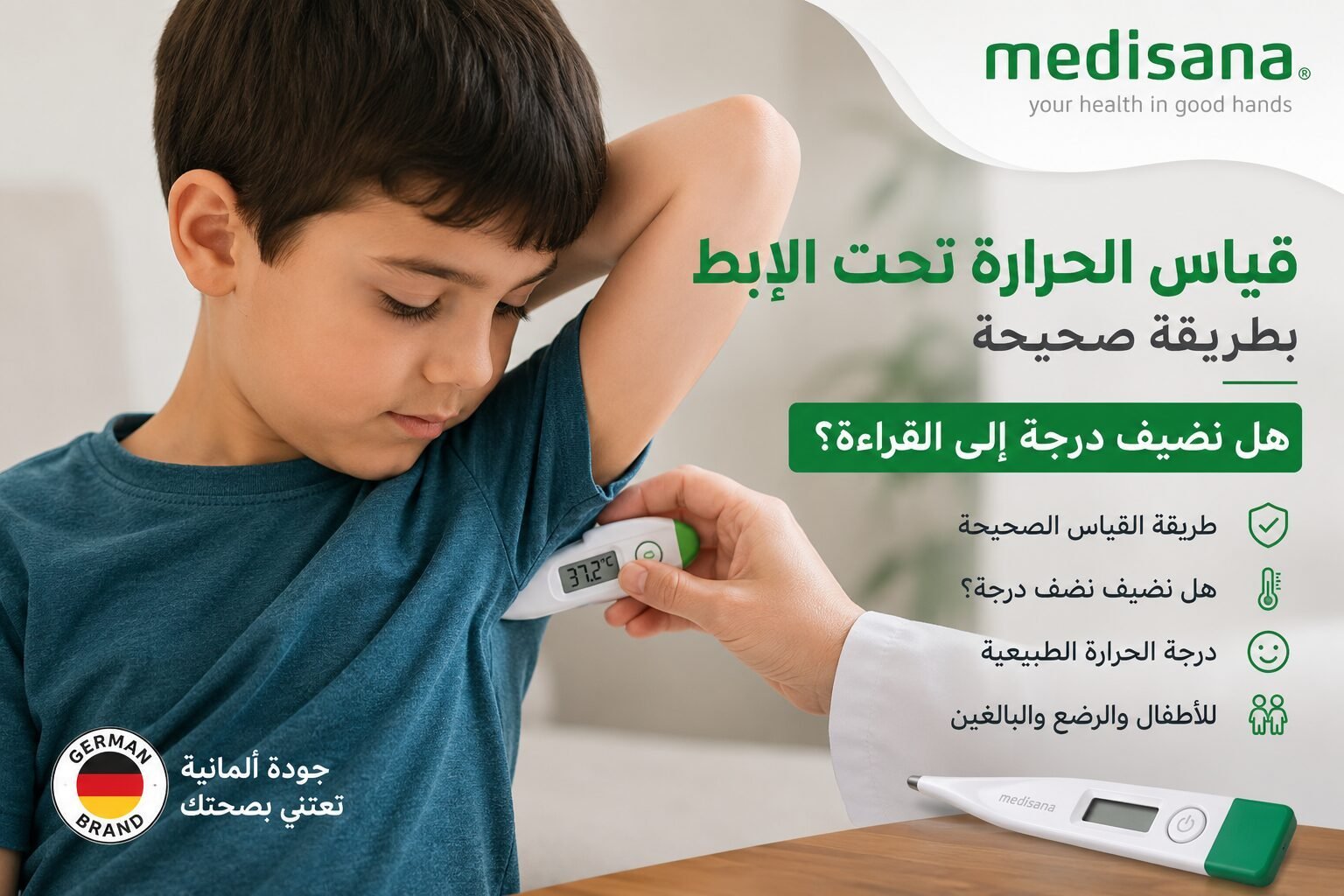
Direct answer: dry the armpit, place the thermometer tip high in the center of the armpit against bare skin, close the arm firmly against the body and wait for the device’s completion signal. Do not automatically add 0.5°C or 1°C. The difference between axillary, oral, ear and rectal temperatures is not a fixed conversion for every person and device, so record the reading as it was measured.
What Does an Armpit Temperature Actually Measure?
An axillary thermometer measures temperature at the skin and tissue of the armpit rather than in the mouth or rectum. Closing the arm around the probe creates a more stable measuring area, but the result can still be affected by skin contact, moisture, placement and measurement duration.
The American Academy of Pediatrics notes that armpit measurement is less accurate than some other methods, although it is simple, non-invasive and can be used as a screening method.
A digital contact thermometer whose instructions allow axillary measurement.
A clean, dry probe and a working battery.
A dry armpit without sweat.
Clothing moved fully away from the measuring area.
The ability to keep the arm closed until the device finishes.
Do not use a forehead, infrared surface or non-contact thermometer under the armpit unless its manufacturer specifically supports that measurement method. Different devices are designed and calibrated for different sites.
How to Measure Armpit Temperature Step by Step
Have the person sit or lie calmly.
Dry the armpit gently with a clean towel.
Turn on the thermometer and wait until it is ready.
Lift the arm and place the probe high in the center of the armpit directly against bare skin.
Lower the arm and hold it comfortably but firmly against the side of the body.
Keep both the arm and thermometer still.
Wait for the beep or completion signal specified for that model.
Remove the thermometer and read the display.
Record the number, time and measurement site as “armpit” or “axillary.”
Clean the probe according to the manufacturer’s instructions.
Where Should the Thermometer Tip Be Placed?
The sensor should sit in the deepest upper-center part of the armpit, surrounded by skin rather than exposed to room air. If the tip sits near the edge of the arm or over clothing, the reading can become less consistent.
Close the arm against the body rather than holding the elbow away. For a child, an adult can gently keep the arm in place so the probe does not slip.
Should You Add Half a Degree or One Degree?
No fixed amount should be added automatically. A conversion rule assumes that the difference between armpit, oral or rectal readings is constant across people, devices and situations, which it is not.
A safer approach is to:
Record the axillary reading exactly as measured.
Interpret it using guidance appropriate to that measurement site.
Follow your clinician’s advice when a threshold matters medically.
If confirmation is needed, repeat the temperature using an appropriate recommended method instead of doing a simple arithmetic conversion.
Do not average temperatures taken from two different body sites.
Why Can an Armpit Reading Be Lower?
The probe was not high enough in the center of the armpit.
The skin was wet with sweat.
The arm was not kept closed against the body.
The thermometer was removed before its completion signal.
The measurement was taken through clothing.
The battery is weak or the device is outside its specified operating conditions.
The number is being compared with a reading from another site such as the ear or rectum.
How to Measure a Child’s Temperature Under the Armpit
Keep the child in a stable position and ask another adult to help if needed. Dry the armpit, place the probe directly against the skin and hold the child’s arm against the body. Do not leave a young child holding the thermometer alone.
For very young infants, temperature interpretation requires extra care. The NHS guidance on fever in children advises urgent medical assessment for a baby under 3 months with a temperature of 38°C or higher. A clinician may recommend a more appropriate method to confirm the temperature depending on age and circumstances.
How to Measure an Adult’s Temperature Under the Armpit
The same placement steps apply. Avoid measuring immediately after strenuous exercise, a hot bath, or coming in from very hot or cold surroundings. Allow the person to settle in the measurement environment and use the same site when comparing repeated readings.
How Long Does an Armpit Temperature Take?
The duration depends on the thermometer model. Do not assume every digital thermometer requires the same number of seconds. Wait for the model’s completion signal and follow any additional timing instructions in the user manual.
Can You Measure Through Clothing?
No. Clothing prevents direct sensor-to-skin contact and exposes the probe to a different local temperature. Move sleeves or clothing completely away from the armpit before measuring.
Does Sweat Affect the Reading?
Yes. Moisture and evaporation can change local skin temperature and interfere with stable probe contact. Dry the armpit before measuring, and allow time to settle after physical activity.
When Should You Repeat an Armpit Measurement?
If the probe moved or slipped away from the center of the armpit.
If the arm was not kept closed throughout the measurement.
If the device did not reach its normal completion signal.
If the reading does not fit the person’s symptoms or condition.
If the skin was wet or the thermometer had just been moved from a very hot or cold environment.
Repeat the same technique carefully. Avoid switching immediately to another body site and directly comparing the two numbers as though they should match.
When Should the Reading Be Confirmed Another Way?
Seek medical guidance when the person is very young, the result is close to an important clinical threshold, symptoms do not match the reading, or an unusual result persists despite correct technique. The purpose of confirmation is to use the most appropriate method—not to search for whichever number is highest or lowest.
Common Errors and How to Fix Them
Error
What to Do Instead
Automatically adding 1°C
Record and interpret it as an axillary reading
Probe near the edge of the armpit
Place it high in the center
Arm left open
Close the arm against the body
Wet skin
Dry the armpit before measuring
Comparing directly with an ear reading
Track the same measurement site when possible
Removing the thermometer early
Wait for the device’s completion signal
When Is an Armpit Reading Not Enough?
Do not let repeated temperature checks delay medical assessment when there are concerning symptoms such as breathing difficulty, difficulty waking, seizure, a concerning rash, neck stiffness, severe dehydration or obvious deterioration.
Frequently Asked Questions
Do you add one degree to an armpit temperature?
No. Do not routinely add a fixed degree. Record the temperature as an axillary reading and interpret it using guidance appropriate to that measurement site and the person’s age and symptoms.
Is an armpit temperature accurate?
It can be useful for screening and monitoring when measured correctly, but axillary temperature is generally considered less precise than some other sites. Placement, skin moisture and arm position matter.
Where exactly should the probe go?
Place the sensor high in the center of the armpit directly against bare, dry skin, then close the arm against the body.
Can I compare an armpit reading with an ear reading?
Not as if the numbers should be identical. Measurement sites differ. For tracking, use the same site and method whenever possible.
Explore Trusted Home Medical Devices and Medical Supplies
Compare blood pressure monitors, inhalation devices, weight scales, massage devices, and home health care products, then choose the most suitable option for your daily needs from WeCare Egypt.
Nebulizer not making mist? Troubleshoot compressor and mesh models by checking power, tubing, filter, cup assembly, batteries, mesh contact and cleaning—without changing the medication dose.
Learn what Perfusion Index (PI) means on a pulse oximeter, how it differs from SpO₂ and pulse rate, why PI changes, and how to use it as a signal-quality clue.
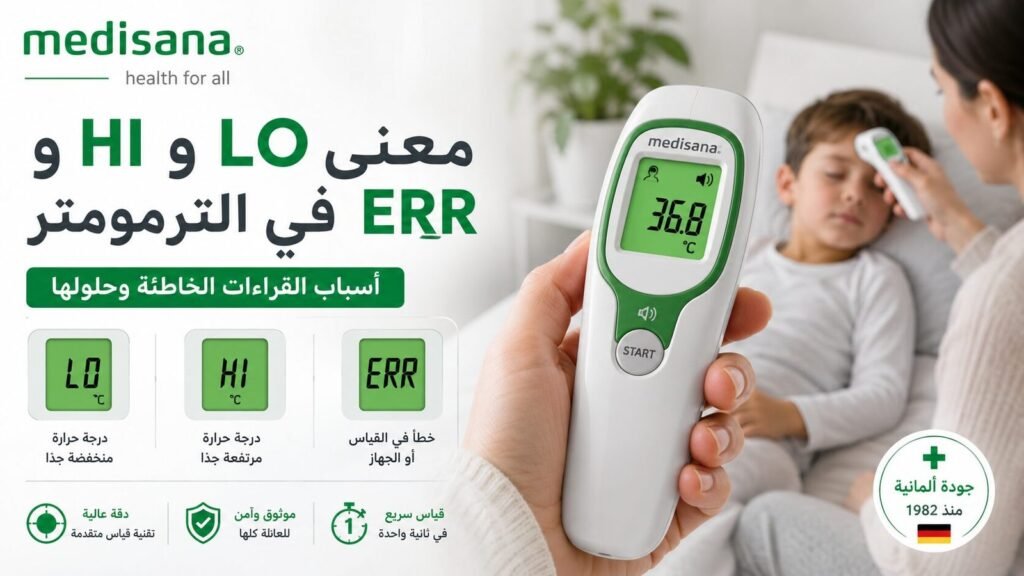
Understand LO, HI, ERR, E1, E2 and battery symbols on digital thermometers, what they may mean, and the correct troubleshooting order before requesting support.
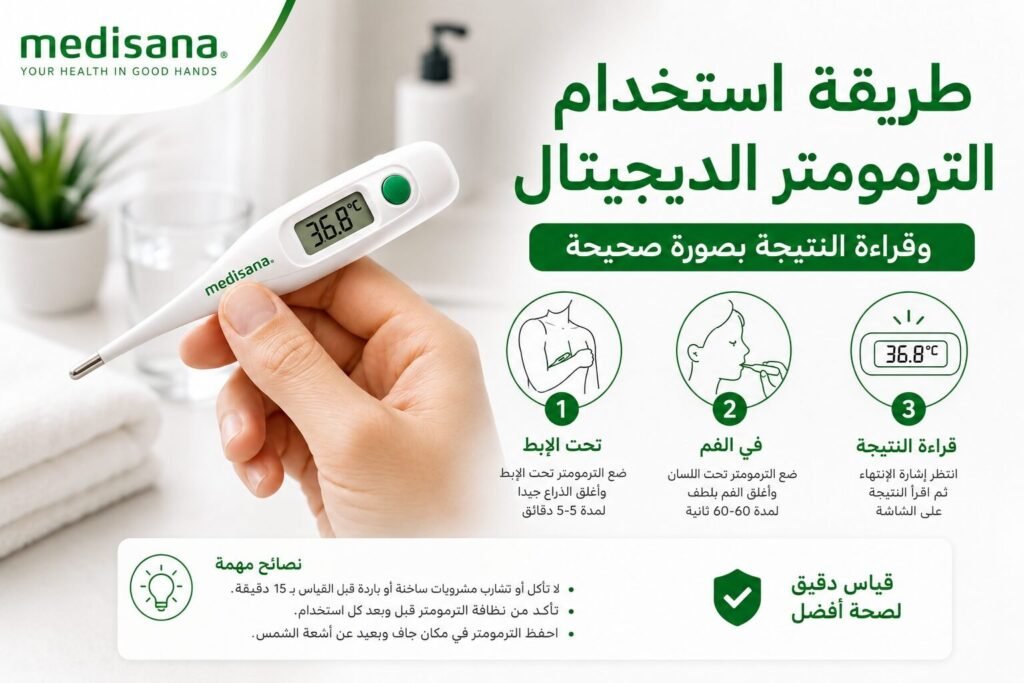
Learn how to use a digital contact thermometer correctly for armpit or oral measurement, read the result, clean the probe and handle LO, HI or ERR safely.
Learn how to measure temperature under the armpit correctly, where to place the thermometer, why you should not automatically add a degree, and when to confirm a reading.
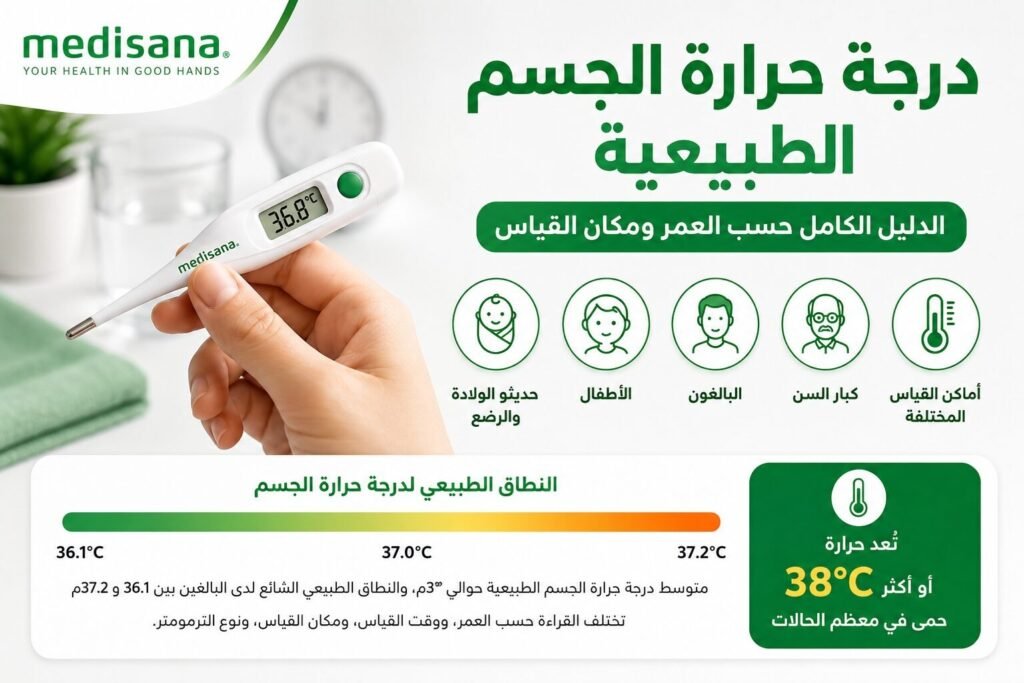
Understand normal body temperature by age, time of day and measurement site, including what 36°C, 37°C, 37.5°C and 38°C can mean and when symptoms matter more than the number.
Thermometer readings different at home? Check measurement site, timing, Body mode, probe contact, forehead distance, sweat, battery and repeat technique before blaming the device.
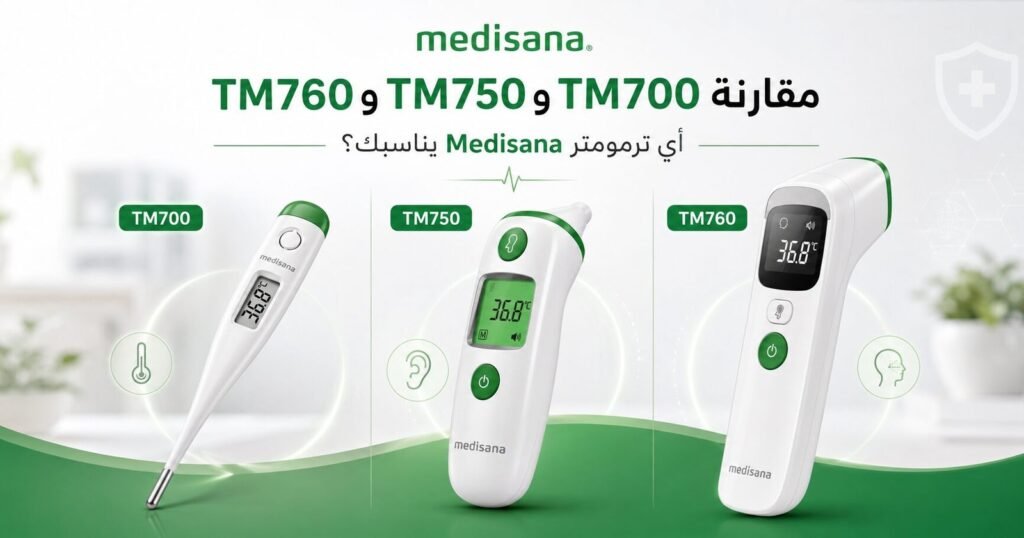
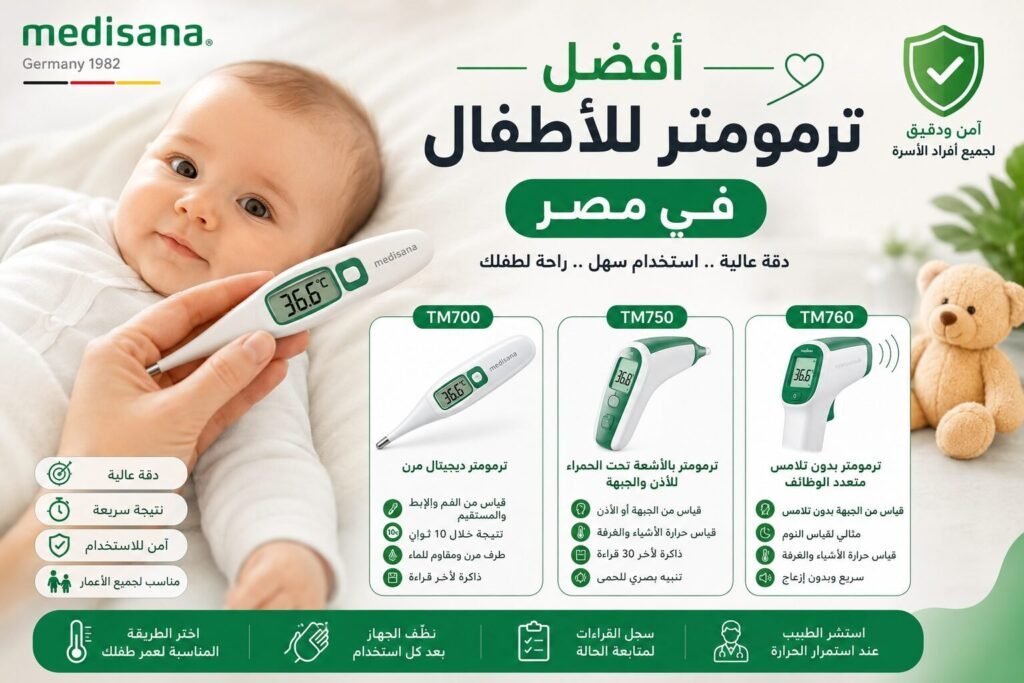
Compare Medisana TM 700, TM 750 Connect and TM 760 for children by age, measurement site, contact vs no-contact use, memory, Bluetooth and sleep-time convenience.
High blood pressure usually causes no symptoms. Learn what headache, dizziness or blurred vision can and cannot tell you, and when a reading above 180/120 with symptoms is an emergency.