Normal Blood Sugar Levels: Fasting, After Meals and HbA1c Chart
16
May
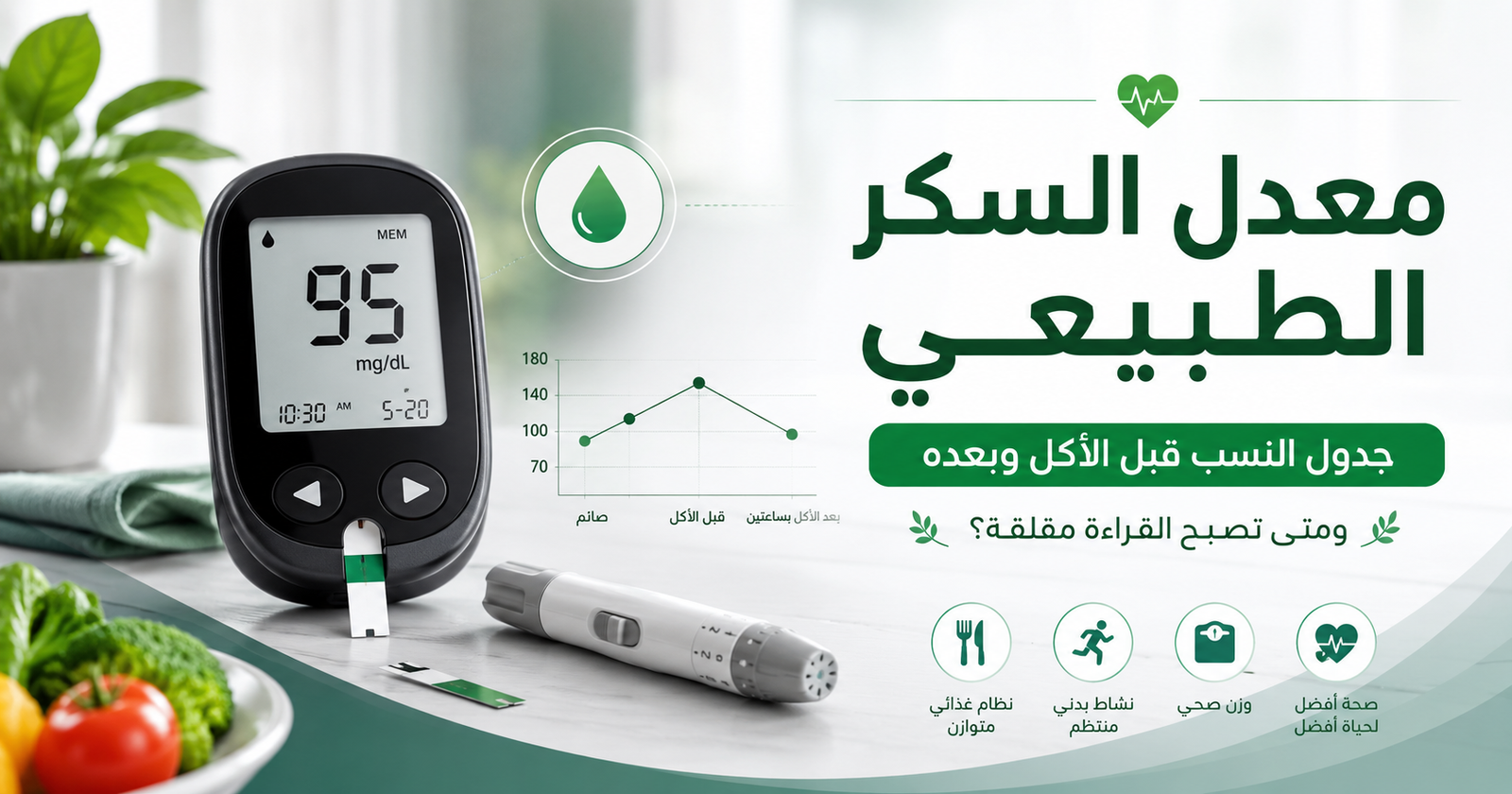
Short answer: there is no single “normal blood sugar” number that applies at every time of day. Diabetes diagnosis uses specific tests such as fasting plasma glucose (FPG), HbA1c and the oral glucose tolerance test (OGTT). Home readings before or after ordinary meals are mainly monitoring data and should not be treated as equivalent to a laboratory OGTT.
Before interpreting a glucose result, first ask: Was it fasting? Was it an HbA1c test? Was it a standardized glucose tolerance test? Or was it a home glucose reading before or after a meal? The meaning of the number depends on the test and context.
Medical note: do not use a single home glucose reading to diagnose diabetes or to change medication or insulin doses. Repeated abnormal readings or significant symptoms should be discussed with a healthcare professional and, when appropriate, confirmed with standardized laboratory testing.
Normal Blood Sugar Levels Used for Diabetes Diagnosis
The following ranges summarize commonly used laboratory diagnostic thresholds published by the American Diabetes Association. They are not the same as day-to-day glucose targets for someone already diagnosed with diabetes.
Test
Normal Range
Prediabetes Range
May Meet a Diabetes Criterion
Fasting plasma glucose (FPG), after at least 8 hours without calories
Below 100 mg/dL
100–125 mg/dL
126 mg/dL or higher
HbA1c
Below 5.7%
5.7–6.4%
6.5% or higher
2-hour oral glucose tolerance test (OGTT) after a standardized glucose load
Below 140 mg/dL
140–199 mg/dL
200 mg/dL or higher
Random plasma glucose
No single diagnostic “normal” number because timing and food intake vary
—
200 mg/dL or higher with classic symptoms of hyperglycemia may meet a diagnostic criterion and requires medical evaluation
What Is the Difference Between “Two Hours After Eating” and an OGTT?
This is a common source of confusion. An oral glucose tolerance test is not simply a glucose check two hours after an ordinary lunch or dinner. It is a standardized medical test using a specified glucose load, followed by measurement at defined times.
Therefore, the 140, 199 and 200 mg/dL thresholds used for a 2-hour OGTT should not automatically be applied to a random home reading after a normal meal. A post-meal home reading is influenced by the amount and type of carbohydrate, medication, activity, illness, sleep and the exact measurement time.
Common Home Glucose Targets for Adults With Diabetes
For many non-pregnant adults with diabetes, commonly used monitoring targets include the following. These are treatment-monitoring targets, not diagnostic definitions of “normal”:
When You Measure
Common Monitoring Target
Before meals
80–130 mg/dL
1–2 hours after the start of a meal
Below 180 mg/dL
Individual targets can differ for older adults, pregnant patients, children, people with other medical conditions, and those with a high risk of hypoglycemia. Use the goals set with your healthcare team rather than changing treatment based on a generic table. The CDC guide to monitoring blood sugar explains the role of home testing and individualized goals.
What Is a Normal Fasting Blood Sugar?
Fasting plasma glucose is measured after at least eight hours without caloric intake; water is generally allowed. For diagnostic classification, a result below 100 mg/dL is in the normal range, 100–125 mg/dL is in the prediabetes range, and 126 mg/dL or higher meets one diabetes criterion when properly evaluated and confirmed as required.
A fasting result of 100 or 105 mg/dL does not by itself mean you have diabetes. It should be interpreted alongside risk factors, HbA1c and any additional tests your clinician considers appropriate.
What Does HbA1c Mean?
HbA1c reflects average glucose exposure over a longer period than a single finger-stick reading. For diagnostic classification, below 5.7% is considered normal, 5.7–6.4% is in the prediabetes range, and 6.5% or higher meets one criterion for diabetes when used appropriately.
A treatment target for someone who already has diabetes is not the same thing as a diagnostic threshold. The same HbA1c value can have different implications depending on whether a person is being screened for diabetes or is already receiving treatment with individualized goals.
Do Normal Blood Sugar Levels Change With Age?
Basic adult diagnostic thresholds do not simply become a different “normal blood sugar chart” for each decade of age. However, treatment and monitoring goals may be individualized according to age, pregnancy, medications, chronic illness, functional status and hypoglycemia risk.
That is why phrases such as “normal sugar at age 40” or “normal sugar after age 60” can be misleading unless the question specifies whether it refers to diagnosis or to a personalized treatment target in a person who already has diabetes.
Can a Home Glucose Meter Diagnose Diabetes?
A home glucose meter is useful for monitoring trends when it is part of a treatment plan, but it does not replace standardized laboratory testing for diagnosis. Results can be affected by hand cleanliness, sugar residue on the fingers, test-strip condition, storage, temperature, blood-sample size and technique.
If a result is unexpectedly high or low and does not fit how you feel, wash and dry your hands, check the strips and meter instructions, then repeat the measurement correctly. If abnormal readings persist, record them and contact a healthcare professional.
How to Measure Blood Sugar at Home More Consistently
Wash your hands with soap and water and dry them completely.
Use an in-date test strip stored according to the manufacturer’s instructions.
Record the timing clearly: fasting, before a meal, after a meal, or another time specified in your care plan.
For post-meal readings, note when the meal started and briefly what you ate.
Do not compare a fasting value with a post-meal value as though they are the same test.
Look for patterns across multiple readings rather than judging your health from one number.
Do not change medication or insulin doses unless your treatment plan tells you how to do so.
When Is a Blood Sugar Reading Concerning?
The significance of a reading depends on the number, symptoms and clinical context. Seek medical advice if glucose readings are repeatedly high or low, or if you develop symptoms such as marked thirst, frequent urination or unexplained weight loss.
For people with diabetes, the CDC describes a blood glucose level below 70 mg/dL as low blood sugar. Severe symptoms such as confusion, loss of consciousness, seizure or inability to safely swallow require urgent help and should be managed according to the person’s emergency hypoglycemia plan.
Common Mistakes When Reading a Blood Sugar Chart
Treating 140 mg/dL after any home meal as a diagnostic cutoff: this confuses an ordinary meal with a standardized OGTT.
Calling anything below 180 mg/dL after a meal “normal for everyone”: this is a common monitoring target for many people with diabetes, not a universal diagnostic definition for people without diabetes.
Diagnosing diabetes from one home-meter reading: diagnosis requires appropriate medical evaluation and standardized testing.
Comparing numbers from different times as though they are equivalent: fasting and post-meal measurements answer different questions.
Changing medication because of one isolated result: doing so can lead to unsafe high or low glucose.
Frequently Asked Questions About Normal Blood Sugar
Is fasting blood sugar of 100 mg/dL normal?
In commonly used diagnostic criteria, 100 mg/dL is the beginning of the prediabetes range. It does not by itself diagnose diabetes, but it is worth interpreting with other test results and risk factors.
Is 180 mg/dL after eating normal?
For many non-pregnant adults who already have diabetes, below 180 mg/dL at 1–2 hours after the start of a meal is a common monitoring target. Your personal goal may differ. For a person without a diabetes diagnosis, this number should not be used by itself as a diagnostic test.
Does a blood sugar of 200 mg/dL mean diabetes?
Not every reading of 200 mg/dL in every situation automatically establishes a diagnosis. A 2-hour value of 200 mg/dL or higher during a standardized OGTT meets one diabetes criterion. A random plasma glucose of 200 mg/dL or higher with classic symptoms may also meet a diagnostic criterion. A home reading after an ordinary meal requires clinical interpretation and is not automatically equivalent to either test.
Is an HbA1c of 6% normal?
When HbA1c is being used for diagnosis in someone not already diagnosed with diabetes, 6% falls in the prediabetes range. In someone already living with diabetes, the result is interpreted in relation to an individualized treatment target.
How often should I check my blood sugar?
Testing frequency depends on the type of diabetes, medications, insulin use, hypoglycemia risk and your healthcare team’s plan. There is no single schedule that is appropriate for everyone.
Bottom Line
A normal blood sugar chart is useful only when you distinguish between laboratory diagnostic criteria, home monitoring readings and treatment targets for people already diagnosed with diabetes. Fasting glucose, HbA1c and the standardized OGTT have defined diagnostic thresholds, while post-meal home targets should not be presented as a universal definition of normal glucose for everyone.
If you get an unexpected result, do not diagnose yourself from one number. Record the time and circumstances, repeat a home test correctly when appropriate, and seek medical evaluation for repeated abnormal readings or concerning symptoms.
This article is for general education and does not replace laboratory diagnosis, individualized treatment goals or medical advice.
Shop from WeCare Egypt
Explore Trusted Home Medical Devices and Medical Supplies
Compare blood pressure monitors, inhalation devices, weight scales, massage devices, and home health care products, then choose the most suitable option for your daily needs from WeCare Egypt.
Nebulizer not making mist? Troubleshoot compressor and mesh models by checking power, tubing, filter, cup assembly, batteries, mesh contact and cleaning—without changing the medication dose.
Learn what Perfusion Index (PI) means on a pulse oximeter, how it differs from SpO₂ and pulse rate, why PI changes, and how to use it as a signal-quality clue.
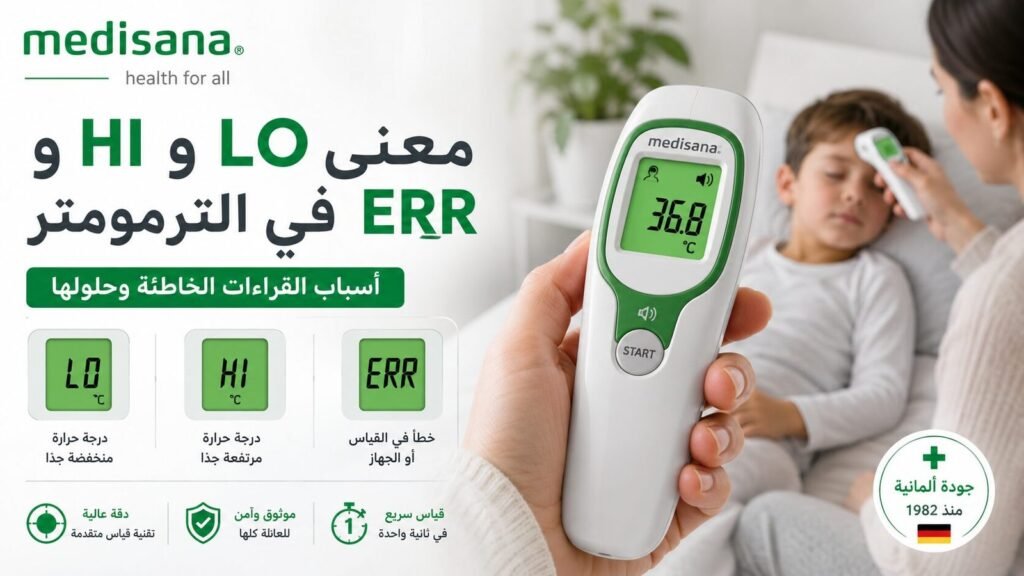
Understand LO, HI, ERR, E1, E2 and battery symbols on digital thermometers, what they may mean, and the correct troubleshooting order before requesting support.
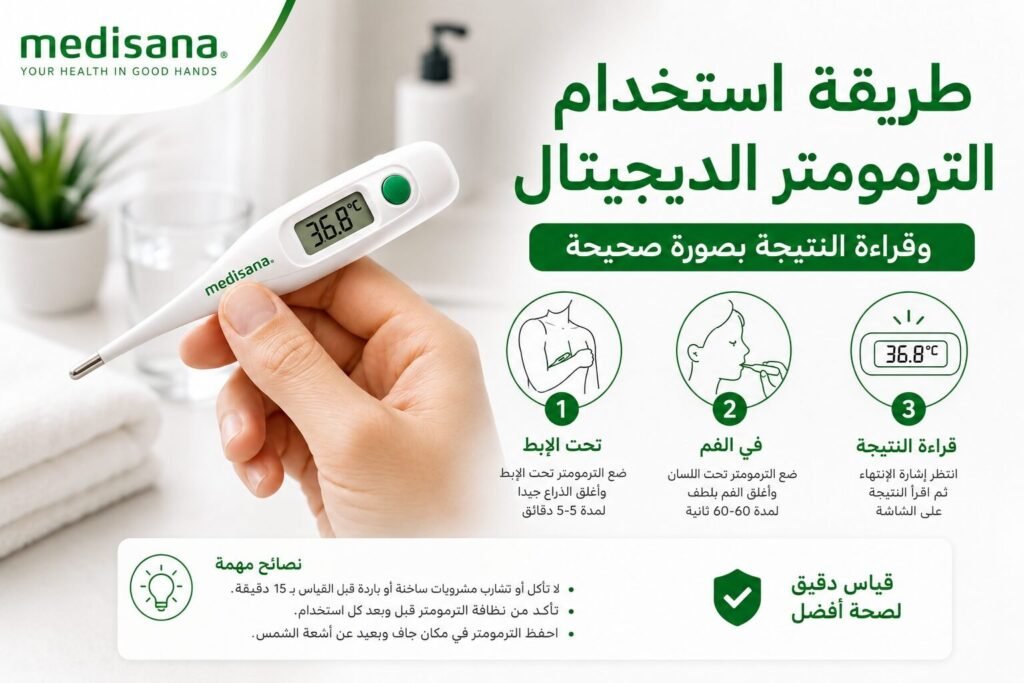
Learn how to use a digital contact thermometer correctly for armpit or oral measurement, read the result, clean the probe and handle LO, HI or ERR safely.
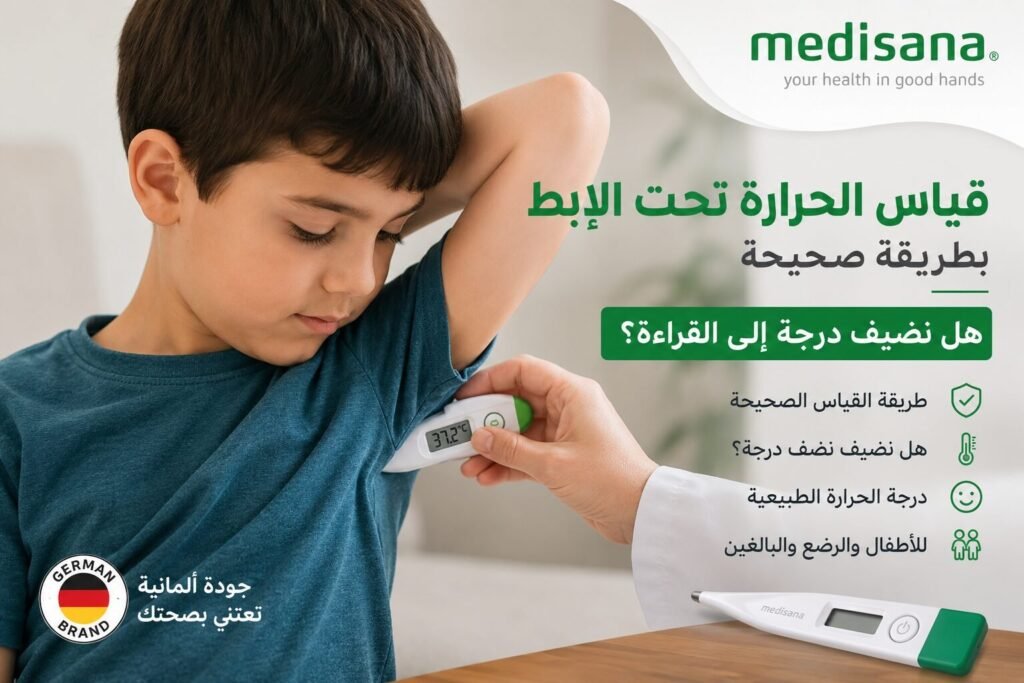
Learn how to measure temperature under the armpit correctly, where to place the thermometer, why you should not automatically add a degree, and when to confirm a reading.
Understand normal body temperature by age, time of day and measurement site, including what 36°C, 37°C, 37.5°C and 38°C can mean and when symptoms matter more than the number.
Thermometer readings different at home? Check measurement site, timing, Body mode, probe contact, forehead distance, sweat, battery and repeat technique before blaming the device.
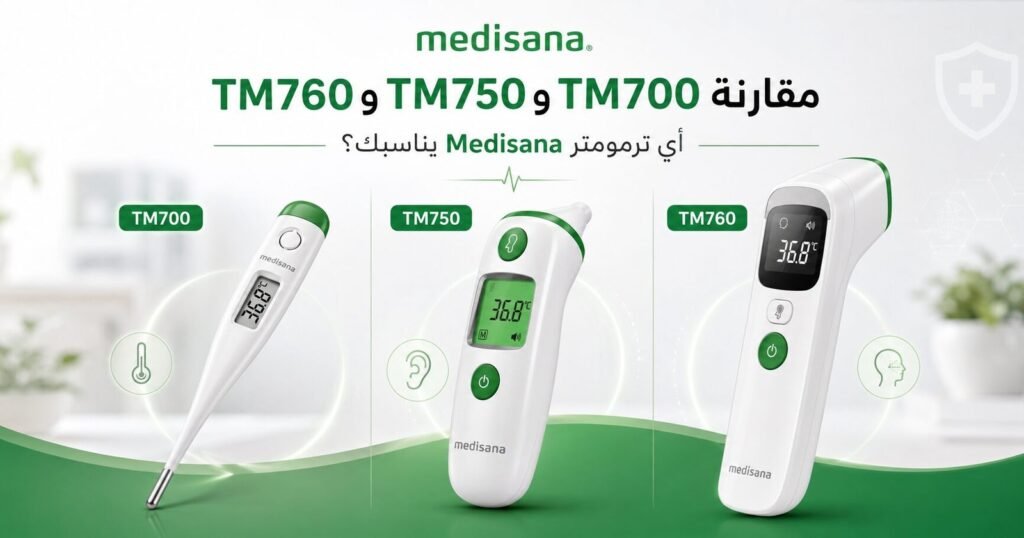
Compare Medisana TM 700, TM 750 Connect and TM 760 for children by age, measurement site, contact vs no-contact use, memory, Bluetooth and sleep-time convenience.
High blood pressure usually causes no symptoms. Learn what headache, dizziness or blurred vision can and cannot tell you, and when a reading above 180/120 with symptoms is an emergency.