Normal Body Temperature by Age and Measurement Site
10
Jul
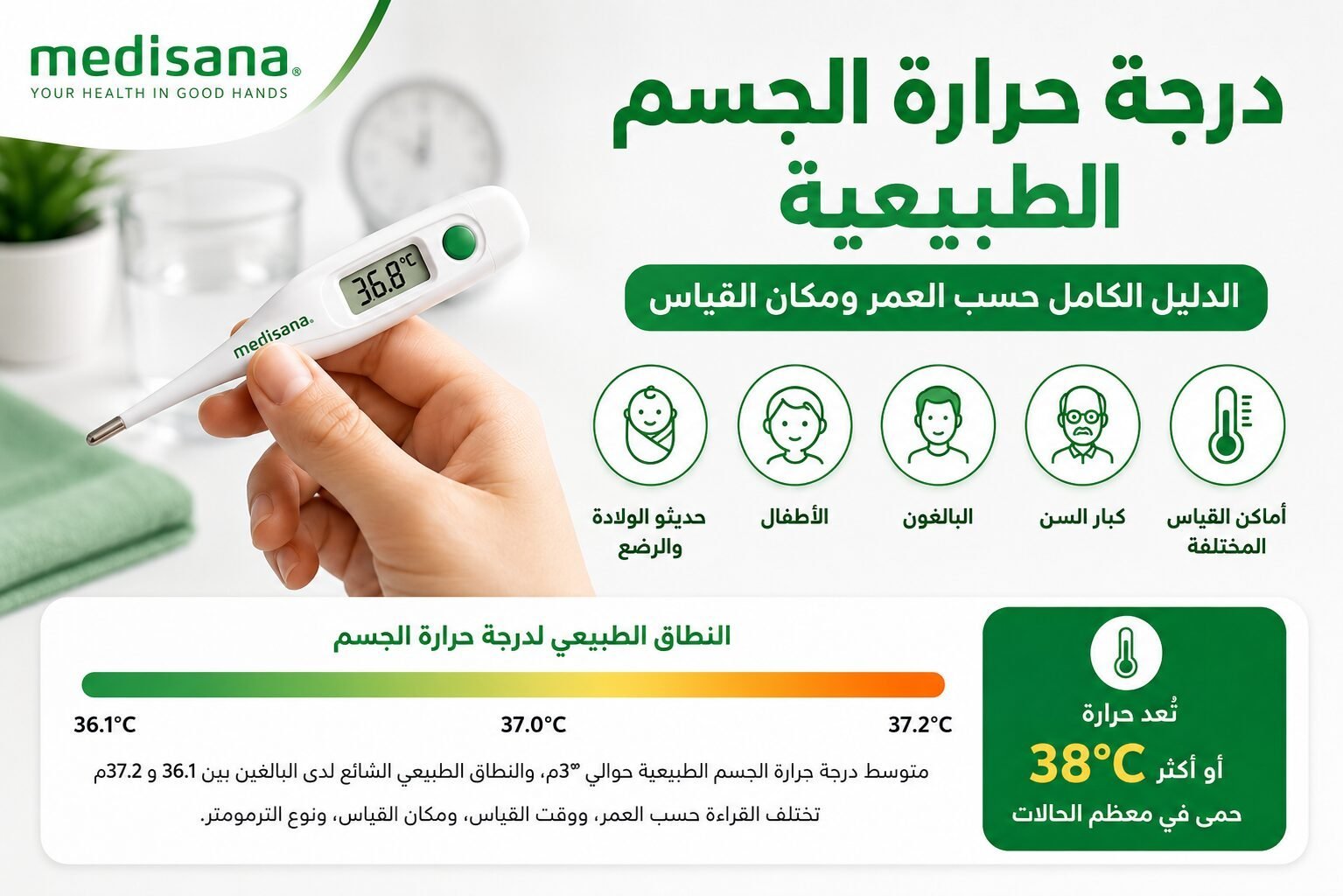
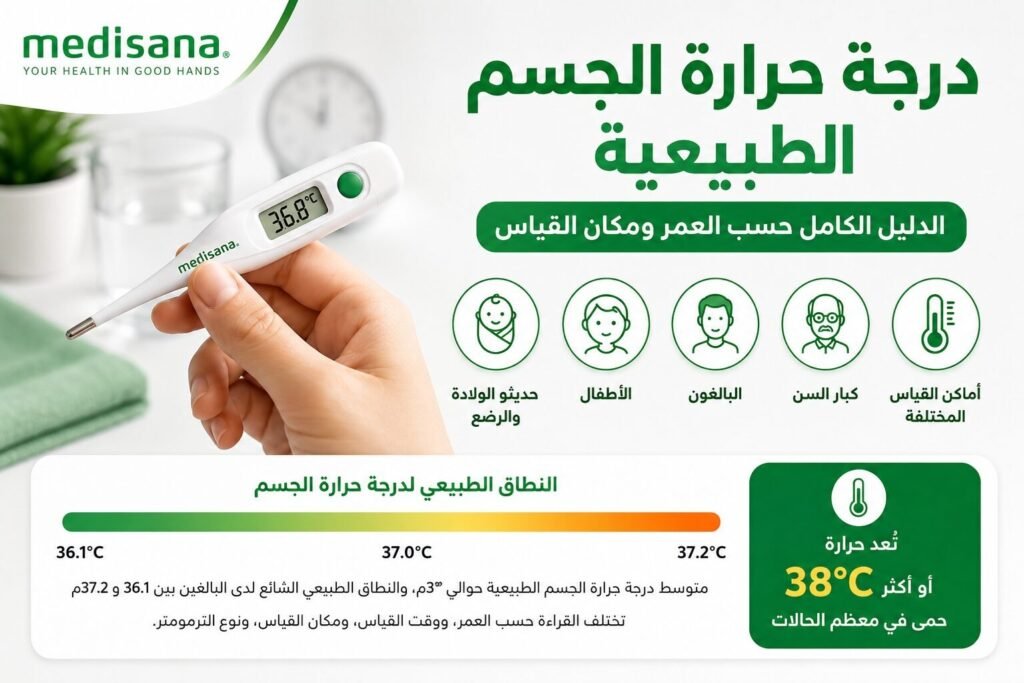
Direct answer: there is no single normal body temperature for everyone. MedlinePlus notes that 37°C (98.6°F) is a commonly cited average, while normal temperature can often range roughly from 36.1°C to 37.2°C (97°F to 99°F). Temperature also varies with age, activity, time of day and measurement method. A reading around 38°C (100.4°F) or higher often indicates fever, but the measurement site, symptoms and age matter.
Medical note: do not interpret a thermometer reading without context. A very young infant, an older adult with a lower baseline temperature, or anyone with serious symptoms may need medical assessment even when the number does not fit a simple chart.
Why 37°C Is an Average, Not a Rule
37°C is useful as a reference point, but it does not mean that every healthy person should measure exactly 37.0°C. MedlinePlus states that normal body temperature varies by person, age, activity and time of day, and gives a common overall range of about 36.1°C to 37.2°C.
If you are monitoring a change over time, use the same thermometer, the same measurement site and similar conditions whenever possible. That makes the trend more meaningful than comparing unrelated readings.
Normal Body Temperature by Age: What Actually Changes?
Age Group
What May Differ
How to Think About the Reading
Infants
Young age makes fever more clinically important
Babies under 3 months with a temperature of 38°C or higher need prompt medical advice
Children
Activity, crying, clothing and measurement site can affect the reading
Interpret the number together with symptoms and the method used
Adults
Time of day, activity and individual baseline affect temperature
Compare with the person’s usual pattern and symptoms
Older adults
Some people may have a lower baseline temperature
A smaller rise from baseline can still be meaningful when symptoms are present
Age does not create a rigid “normal temperature chart” that applies identically to everyone. It changes the clinical context, the expected baseline and sometimes the urgency of assessment.
How Time of Day Affects Body Temperature
Body temperature normally changes during the day. MedlinePlus notes that in adults it is typically lowest in the early morning and can be higher later in the day.
If you are following a fever or trying to understand your normal baseline, record the time as well as the temperature and measurement site.
Why the Measurement Site Changes the Reading
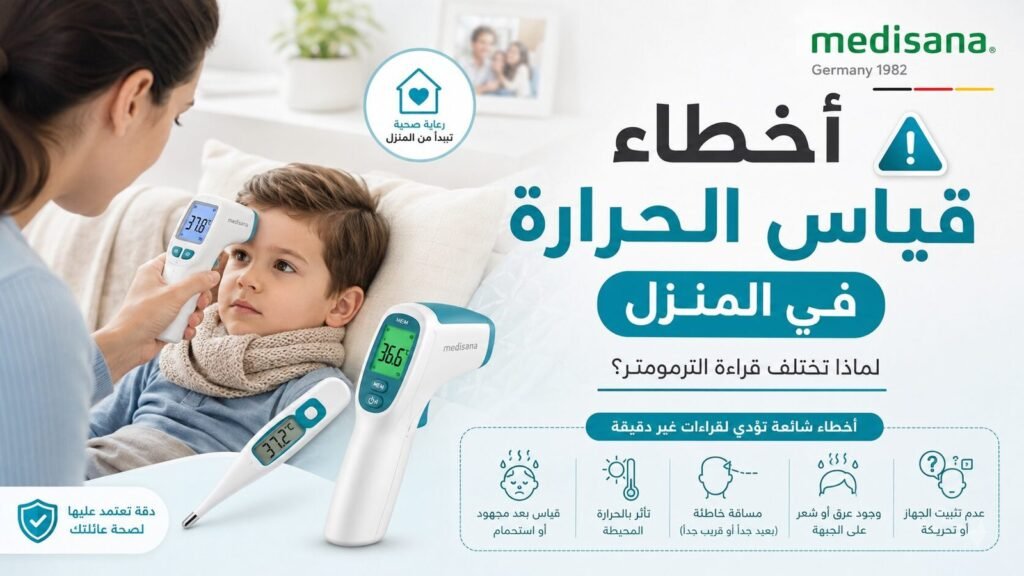
Oral, rectal, axillary, ear and forehead measurements are taken from different locations and are affected by different factors. There is no universal rule that lets you accurately convert every reading by simply adding or subtracting a fixed number.
Measurement Site
What Can Affect It
Common Mistake
Armpit
Skin dryness, probe contact and how firmly the arm is held against the body
Measuring over clothing
Oral
Probe position, breathing, recent hot or cold drinks
Measuring immediately after eating or drinking
Ear
Probe direction, earwax and ear-canal size
Poor positioning in the ear canal
Forehead
Sweat, hair, room conditions and sensor distance
Using the wrong mode or distance
Rectal
Technique and safe insertion
Using the method without understanding the instructions
MedlinePlus advises telling your healthcare provider which measurement method you used, because different sites do not produce identical values.
Is 36°C a Normal Body Temperature?
For some people and some measurement sites, a reading near 36°C can occur without indicating illness, especially if the person feels well and the measurement was taken correctly.
However, a clearly low temperature combined with confusion, unusual drowsiness, severe shivering, slow breathing or significant cold exposure needs medical attention. Do not use a general “normal range” to dismiss serious symptoms.
Does 37°C or 37.5°C Mean Fever?
37°C is close to the commonly cited average. A reading of 37.5°C does not automatically mean fever in every person or at every measurement site. Time of day, activity and the site used can affect the result.
If symptoms are present or the reading seems unexpected, repeat the measurement correctly using the same site and thermometer rather than mathematically converting it to another site.
When Is 38°C Considered a Fever?
MedlinePlus states that a temperature above 38°C (100.4°F) most often means fever related to infection or illness. The NHS also uses 38°C or higher as an important fever threshold in children.
Age changes the urgency: the NHS advises urgent medical assessment for a baby under 3 months with a temperature of 38°C or higher. A thermometer number should always be interpreted alongside the person’s age and symptoms.
What Can Temporarily Raise or Lower a Temperature Reading?
Exercise or active play.
A hot bath or heavy clothing.
Hot or cold drinks before an oral measurement.
Coming indoors from very hot or cold weather.
Changing thermometers or measurement sites.
Incorrect sensor position or distance.
Measuring at a different time of day.
MedlinePlus recommends waiting after heavy exercise or a hot bath and allowing time after eating or drinking before an oral temperature measurement.
How to Establish a Useful Personal Baseline
When a person is well, a small number of readings taken on different days with the same thermometer, same site and similar conditions can help show their usual range.
The goal is not to measure repeatedly throughout the day, but to know what is typical enough to recognize a meaningful change later.
When Can a Low Temperature Be Concerning?
A low reading can be caused by measurement error, environmental exposure or a medical problem. If the reading is unexpectedly low, repeat it correctly with a reliable thermometer.
Seek medical help when a low temperature is accompanied by confusion, marked drowsiness, abnormal breathing, severe weakness, persistent shivering or significant cold exposure.
When Is the Thermometer Number Not Enough?
Seek medical help for serious symptoms such as difficulty breathing, altered consciousness, seizure, a concerning rash, severe dehydration, neck stiffness or rapid deterioration—even if the temperature is not especially high.
A thermometer can tell you a temperature. It cannot identify the cause of illness or rule out a serious condition.
How to Measure Temperature More Consistently
Use the same measurement site when comparing readings over time.
Follow the instructions for the exact thermometer model.
Do not measure over clothing when using an armpit thermometer.
For oral readings, wait after hot or cold food and drinks.
For forehead thermometers, keep the sensor area clear and use the specified distance.
Record the measurement site and time with the temperature.
Yes, it can be. Normal body temperature varies between people and by time of day and measurement site.
Is 37°C a fever?
Usually not by itself. 37°C is close to the commonly cited average body temperature.
Is 37.5°C a fever?
Not necessarily. The interpretation depends on the measurement site, time of day, symptoms and individual baseline.
Is 38°C a fever?
38°C is commonly used as an important fever threshold, especially in children. Age and symptoms determine how urgently it should be assessed.
Why is my armpit temperature different from my oral or forehead temperature?
Different measurement sites reflect temperature differently and are affected by different sources of error. Use one method consistently when tracking changes.
This article is for general education and does not replace medical diagnosis or urgent evaluation when serious symptoms are present.
Shop from WeCare Egypt
Explore Trusted Home Medical Devices and Medical Supplies
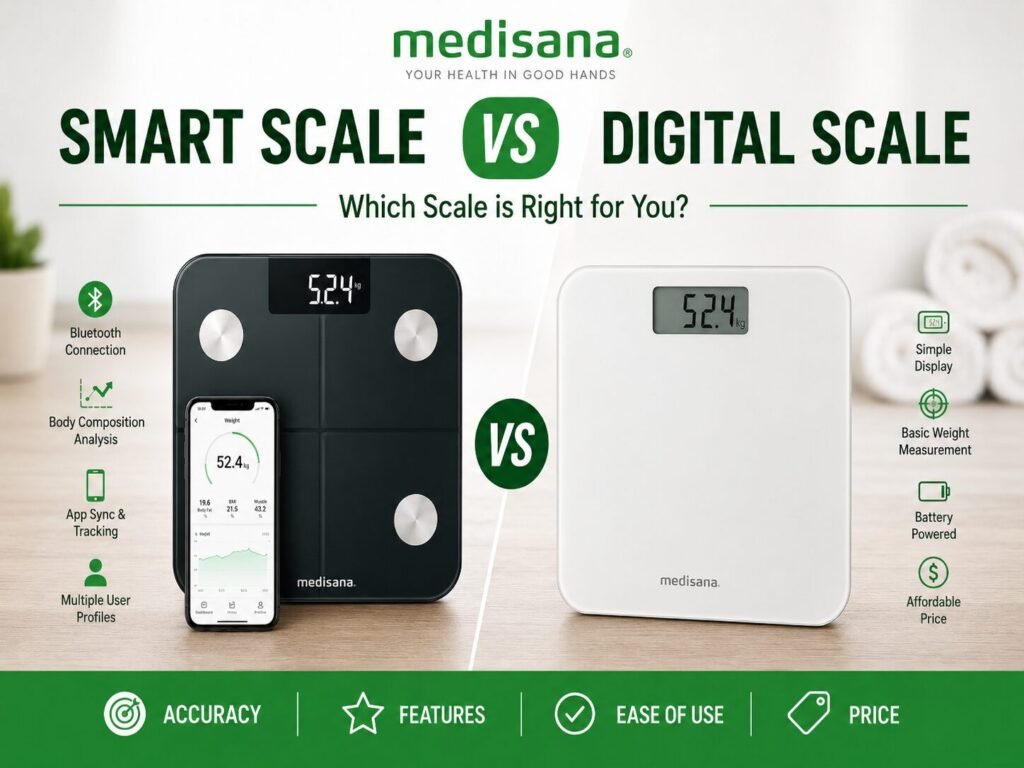
Compare blood pressure monitors, inhalation devices, weight scales, massage devices, and home health care products, then choose the most suitable option for your daily needs from WeCare Egypt.
Nebulizer not making mist? Troubleshoot compressor and mesh models by checking power, tubing, filter, cup assembly, batteries, mesh contact and cleaning—without changing the medication dose.
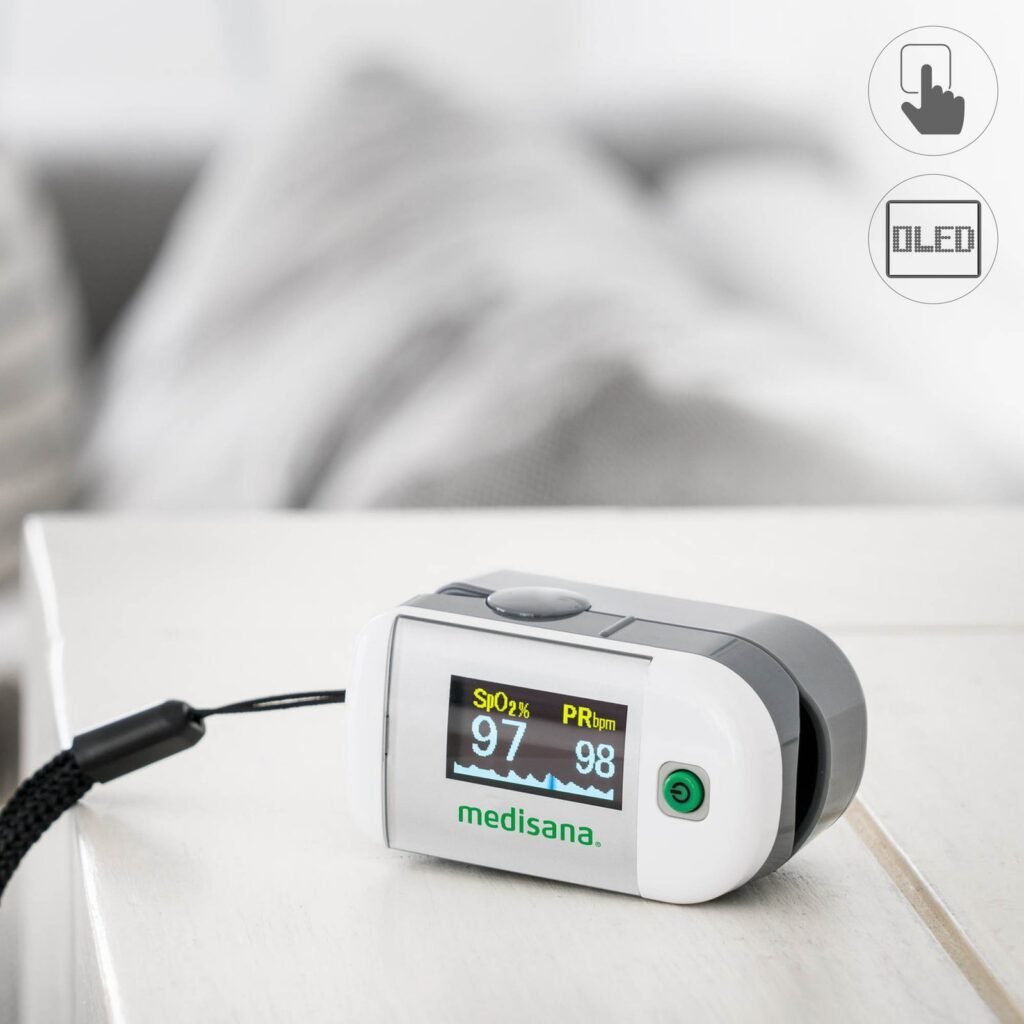
Learn what Perfusion Index (PI) means on a pulse oximeter, how it differs from SpO₂ and pulse rate, why PI changes, and how to use it as a signal-quality clue.
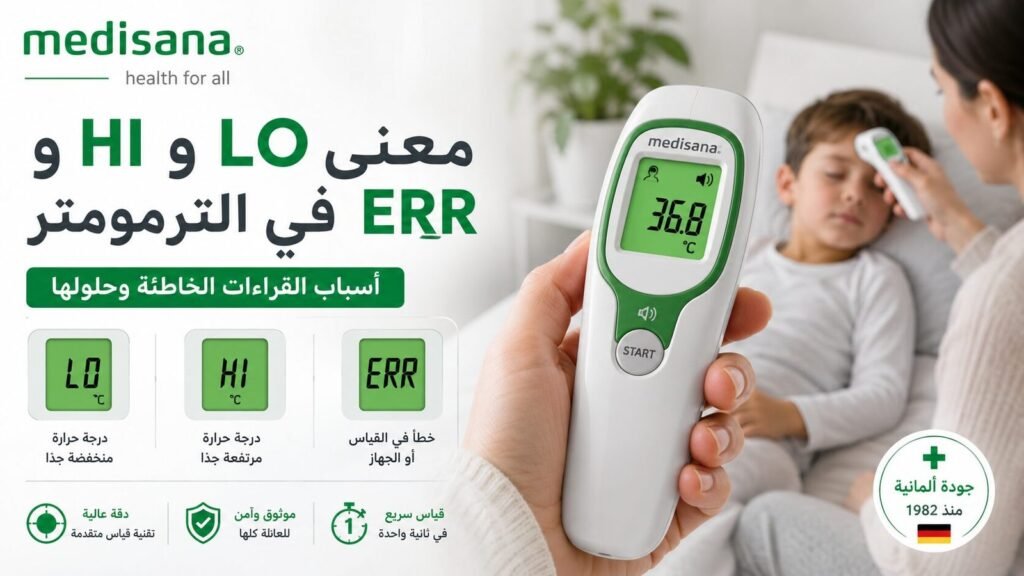
Understand LO, HI, ERR, E1, E2 and battery symbols on digital thermometers, what they may mean, and the correct troubleshooting order before requesting support.
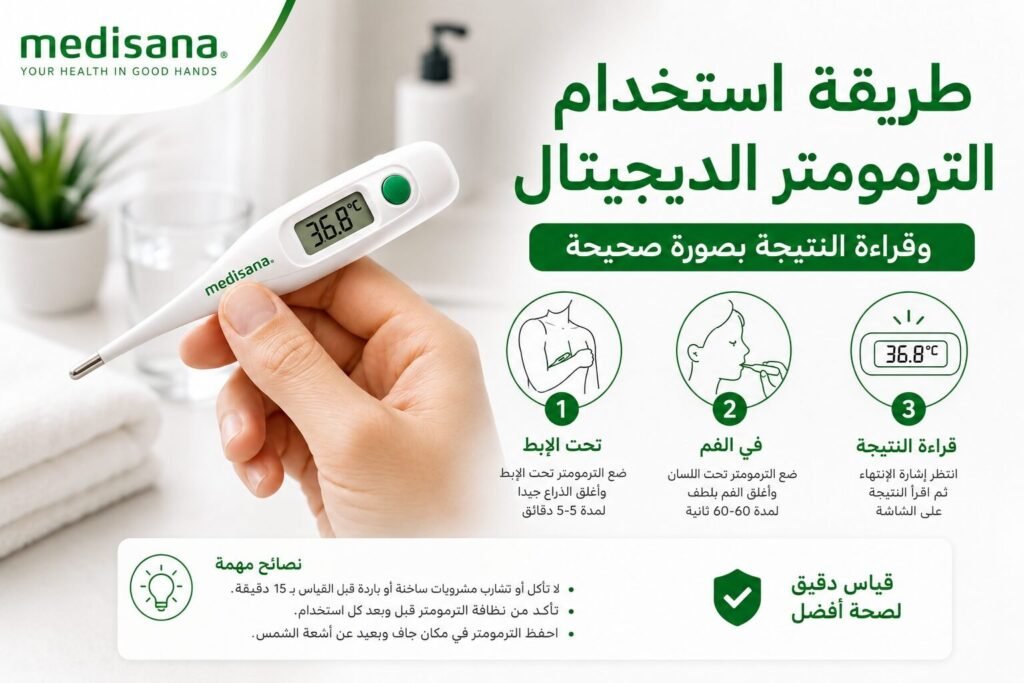
Learn how to use a digital contact thermometer correctly for armpit or oral measurement, read the result, clean the probe and handle LO, HI or ERR safely.
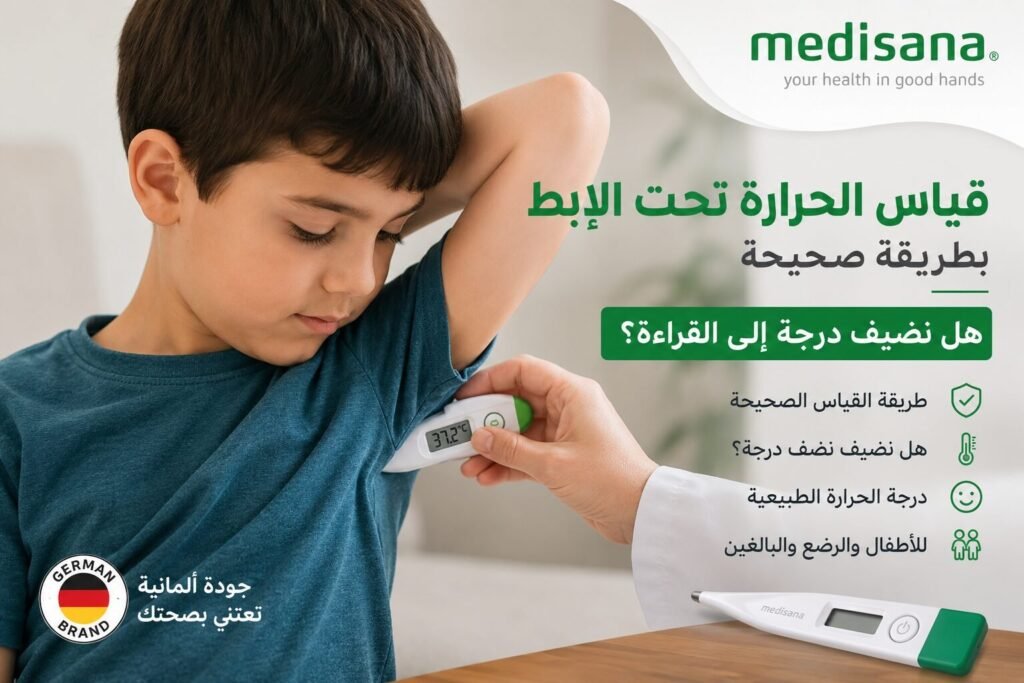
Learn how to measure temperature under the armpit correctly, where to place the thermometer, why you should not automatically add a degree, and when to confirm a reading.
Understand normal body temperature by age, time of day and measurement site, including what 36°C, 37°C, 37.5°C and 38°C can mean and when symptoms matter more than the number.
Thermometer readings different at home? Check measurement site, timing, Body mode, probe contact, forehead distance, sweat, battery and repeat technique before blaming the device.
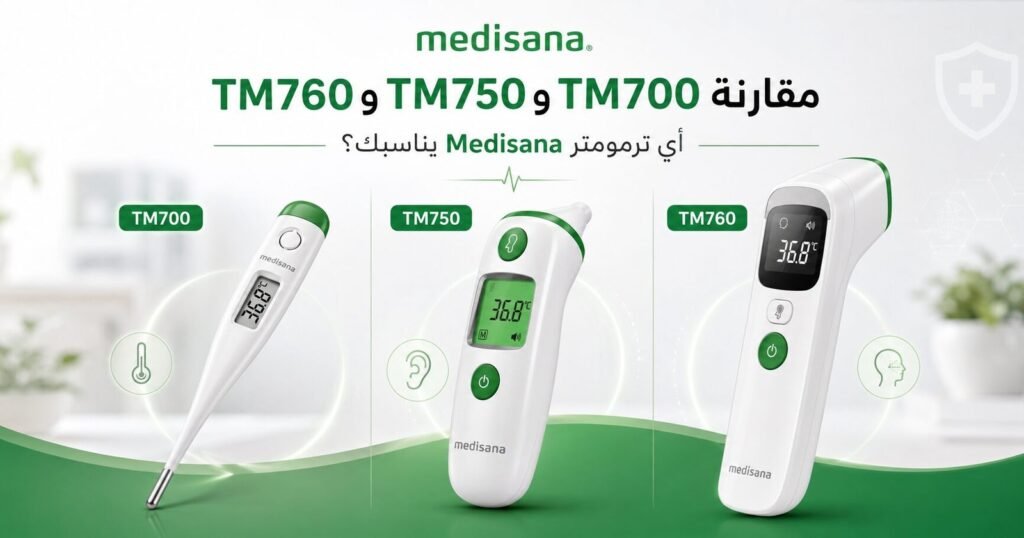
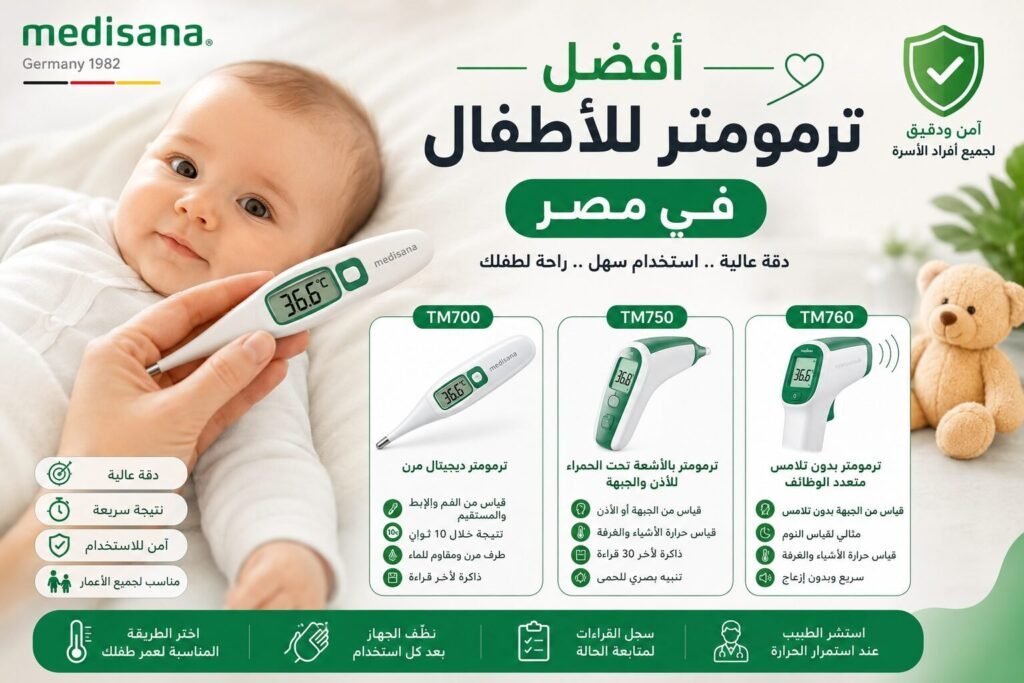
Compare Medisana TM 700, TM 750 Connect and TM 760 for children by age, measurement site, contact vs no-contact use, memory, Bluetooth and sleep-time convenience.
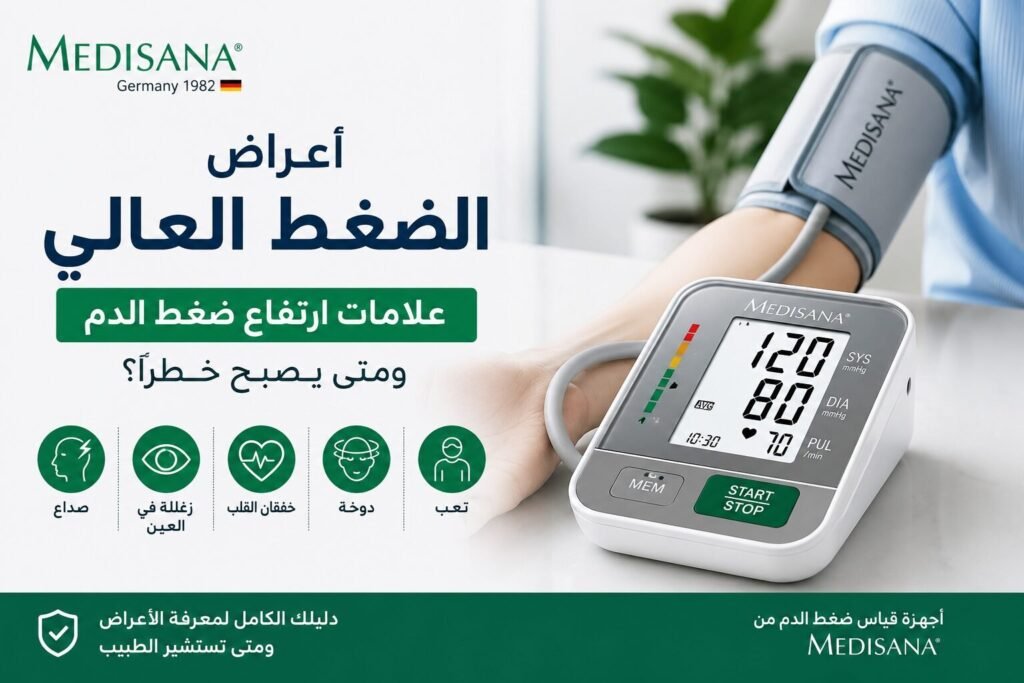
High blood pressure usually causes no symptoms. Learn what headache, dizziness or blurred vision can and cannot tell you, and when a reading above 180/120 with symptoms is an emergency.